Ballet Flats Slipping Off the Heel: Causes and Quick Fixes
Quick Answer: Ballet flats slip off the heel when the back counter is wider than your heel, when the sole is too smooth to grip, or when your socks let the foot slide forward. Start with a heel test: walk up a short ramp and see whether the heel lifts with each step. If it does, try a heel grip or a thin heel liner first. A cobbler can often reshape the back counter if the problem persists.
You bought the flats for a long day of errands, and by the second block your heel was lifting out of the back with every step. You kept hooking your toes to hold the shoe on. It is one of the most common complaints about flats, and it is almost never a sign that you chose the wrong style.
Why do ballet flats slip off the heel?
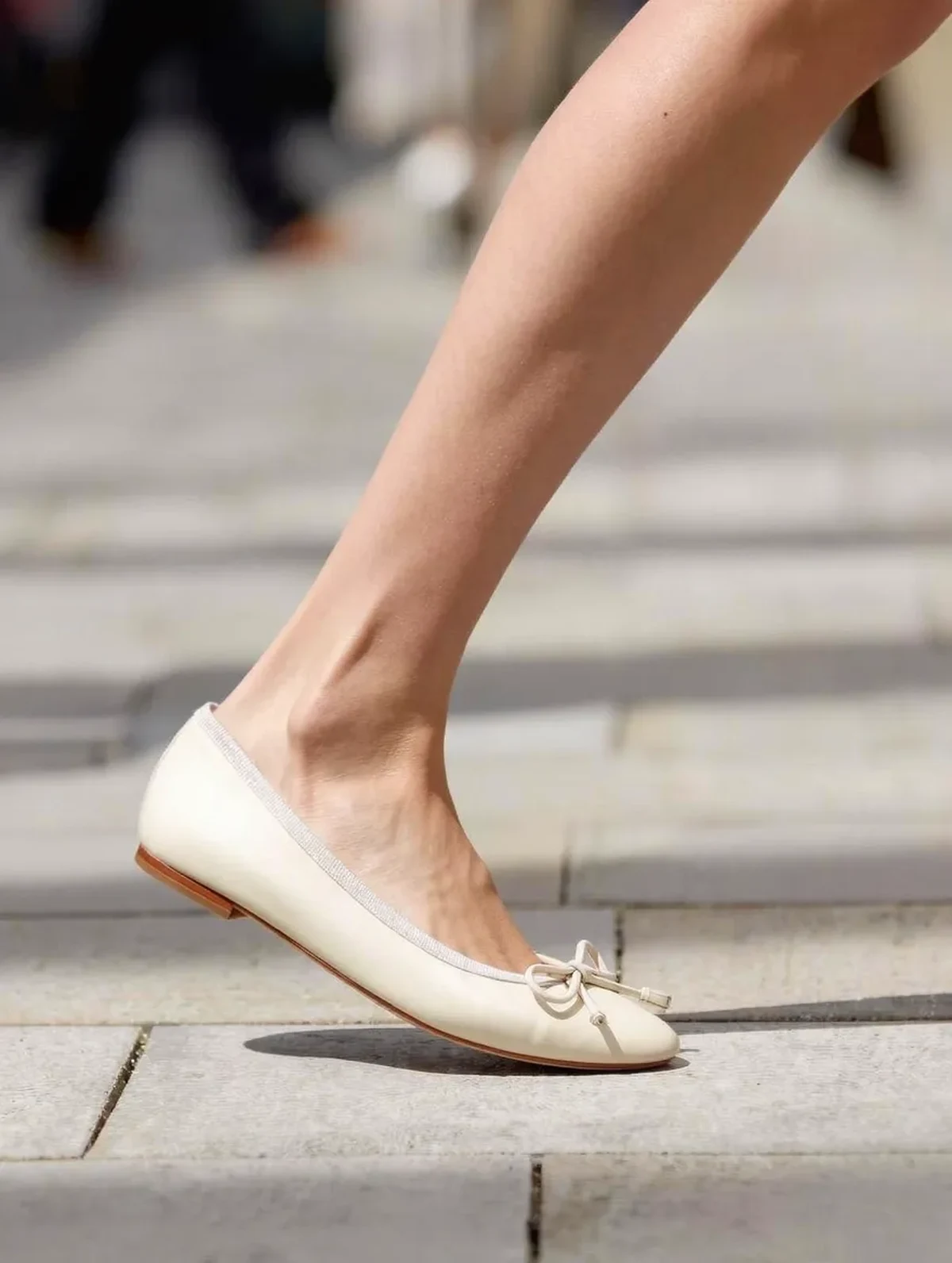
A ballet flat has very little structure at the back. The heel counter, which is the stiff piece that wraps around your heel, is often thin or low, so the shoe depends on the fit of the heel cup to stay put. If the cup is wider or shallower than your heel, the heel rises out of the shoe with each step.
Grip matters too. A smooth leather or patent sole slides on a smooth floor, and that slide pushes the foot forward inside the shoe. The heel then lifts to compensate. Finally, socks change everything. A no-show sock with a slick finish lets the foot move, while a sock with some grip keeps the heel anchored.
Is the flat too big, or is the heel shape wrong?
This is the question that decides the fix. A flat that is simply too big will slip everywhere, and the toe will feel loose and sloppy. A flat that fits the toes but lifts at the heel has a heel cup that does not match your heel shape, and that is a different problem.
Run a simple check. Put the flat on and walk up a short ramp or a flight of stairs. If your toes stay comfortable and the heel still lifts, the shape is the issue. If your toes slide forward and bump the front, the flat is too big. Also look at the back of the shoe when you stand. If the counter folds in or bends over at the top, the heel will keep slipping.
Myth vs Fact: A Snug Flat Will Stretch Into a Fit
Myth: if a flat feels tight at the heel, it will stretch to fit. Fact: leather can stretch across the width and the toe box, but a stiff heel counter usually holds its shape. A flat that slips at the heel is more likely to keep slipping after it stretches.
Myth number two is that a bigger size always solves the problem. Going up a full size usually gives you a loose toe and a heel that still lifts, so you trade one problem for another. If you are between sizes, try a half-size-down flat with a heel grip before you go up, and compare how each one feels after ten minutes of walking.

Which quick fixes actually hold?
Start with a heel grip. These thin, soft pads stick to the inside of the back counter and fill the gap between the heel and the shoe. They are cheap, easy to remove, and work well on most leather and suede flats. Place the grip, then walk the same route you took before and compare.
A heel liner works in a similar way, but it is a little thicker and sits across the whole back of the shoe. If you prefer a no-show look, choose a sock with a grip band on the heel. Elastic straps that wrap around the ankle are another option for flats with a looser cut. For a more permanent change, ask a cobbler to take in the back counter. They can reshape it so it follows your heel more closely, which often solves the problem without changing the shoe’s look.
5 Mistakes That Make Slipping Worse
-
Buying a size up to fit your toes. You trade a tight toe for a heel that lifts with every step.
-
Wearing brand-new flats all day. Leather needs a few wears to soften, so start with a short walk and build up.
-
Using a thick insole to fill the gap. A bulky insole pushes your foot up and forward, which can make the heel slip more.
-
Choosing a slick sock to avoid lines. The slick finish is exactly what lets the foot slide.
-
Ignoring the back counter. Many people never look at it, but it is the part of the shoe that decides whether the heel stays down.
When is it time to see a cobbler?
If you have tried a heel grip, a liner and a grip sock, and the heel still lifts, a cobbler is the right next step. A good cobbler can reshape the back counter, take in the heel area or add a small piece of lining that makes the cup fit your heel more closely.
Bring the flats you wear most often, and walk in them for the cobbler to see. Ask them to show you the change before they finish the work. A small, careful adjustment keeps the look of the shoe and gives you the secure fit you were expecting when you bought it.
FAQ: Ballet Flat Heel Slipping Questions, Answered
Will a heel grip show under my foot?
Most heel grips sit inside the back of the shoe and do not show from the outside. Choose a thin, soft grip in a color close to the lining to keep it hidden.
Can a flat that is slightly big be fixed?
Often, yes. A heel grip or liner can fill a small gap, and a cobbler can take in the back counter. If the toe is loose, a half-size change is usually the better option.
Are leather flats better than suede for grip?
Suede often has more grip on the sole than smooth leather, but the fit matters more than the material. Test any flat with the heel-ramp check before you decide.
TL;DR:
- Ballet flats slip when the heel cup is wrong, the sole is slick, or the socks let the foot move.
- Walk up a short ramp to tell a heel-shape problem from a size problem.
- Try a heel grip, a liner or a grip sock before you buy a new size.
- If nothing holds, ask a cobbler to reshape the back counter.
With the right heel fit and a little grip, ballet flats can be the most comfortable pair you own for a full day out.
Keep Reading
This article is for general styling and informational purposes only. Trends, sizing, availability and pricing may vary by brand and season.