The Boot Wardrobe: Ankle, Knee and Everything Between for the Cold Half-Year
Quick Answer: Three boots cover October to April: a block-heel Chelsea (the workhorse — put most of your budget here, it does most days), a knee boot for skirts and dresses, and a weather pair for the worst of it. Protector spray on day one, salt-wipes through winter, heel tips replaced early.
Boots are the most-worn shoe category most people own, by a distance. Six months of the year, essentially every day.
And most boot collections happen by accident — three pairs that do the same job and a gap where the useful one should be.
Here’s the architecture, and where the money should actually go.

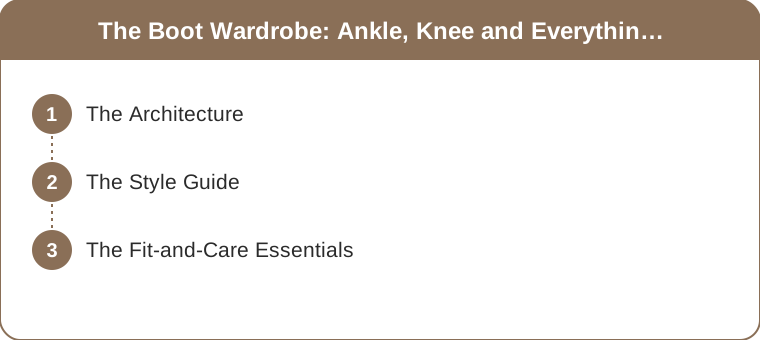
Which three boots do you actually need?
1. The ankle boot workhorse. A block-heel Chelsea in black or dark brown. This pair does perhaps 70% of your boot wearing, which means it’s where the investment belongs. Buy the best you can, wear it into the ground, get it resoled.
2. The knee or tall boot. The partner for skirts, dresses and tights — the pair that makes a whole category of outfit possible. Nothing else covers this job.
3. The weather boot. Rain and snow. Lug soles have made function genuinely fashionable, which is a rare and welcome alignment. If you live somewhere with salted pavements, this pair earns its place by protecting the other two.
The expansion slot comes fourth, not first: western, combat, or a sock boot. Personality pairs are the ones people buy first and regret, because the core wasn’t covered.
The selection rule that matters: buy against your wardrobe. Check your trouser hems and skirt lengths before buying, because the interaction is what decides whether a boot gets worn.

How do you match boots to hems and skirts?
This is where most boot outfits succeed or fail.
Ankle boots and cropped hems. The critical detail is where the trouser hem meets the boot shaft. Either the hem sits just above the shaft — a clean, deliberate meeting — or it covers it entirely. A hem that ends mid-shaft, with a sliver of ankle showing through the gap, cuts the leg awkwardly. Try it standing in front of a mirror before you commit to the outfit.
Knee boots and midis. Aim for a couple of inches of overlap between hem and boot top, or a clear gap of tights. The zone where the hem lands exactly at the boot top is the one to avoid.
Tights bridge everything. Matching tights to your boots creates an unbroken column from waist to toe and is the single most reliably lengthening combination in cold-weather dressing.
Calf width is a real constraint on knee boots. Measure the widest part of your calf and check the shaft circumference before ordering. Stretch panels and elasticated backs exist specifically for this, and they’re a solution rather than a compromise.
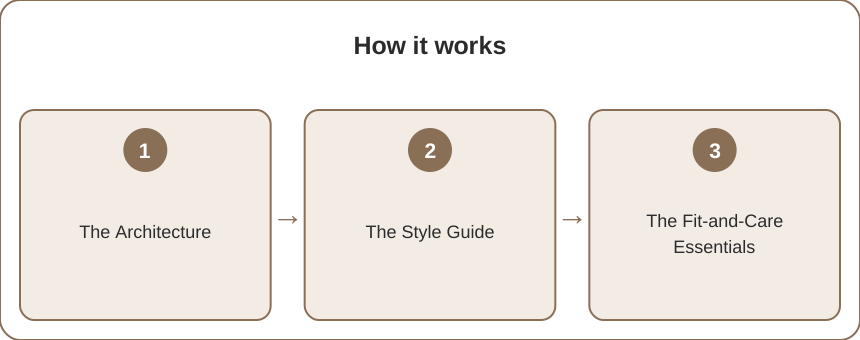
What should you check before buying boots?
- Try them on in the afternoon. Feet swell up to about half a size through the day. A boot that fits at 10 a.m. is a problem at 6 p.m.
- Wear the socks you’ll actually wear. A thick winter sock versus a thin one is easily half a size of difference.
- Walk for ten minutes in the shop. Not three steps. Check your heel doesn’t lift and there’s a thumb’s width at the toe.
- Be honest about the heel height. How much do you actually walk on a normal day? A boot you avoid because of the heel is a boot you don’t own.
- Measure your calf for tall boots, and check the shaft height against your knee — a shaft that catches the back of the knee when you sit is uncomfortable for the life of the boot.
Leather versus suede: leather handles weather far better and cleans easily. Suede has better texture and looks more expensive, but rain and salt are genuinely hard on it. Either way, protector spray on day one, before the first wear.
What Nobody Tells You About Making Boots Last
Spray before the first wear, not after the first stain. Protector works as prevention and does very little as a cure. Re-apply monthly through winter.
Salt destroys leather quietly. A damp cloth wipe after any walk on salted pavement takes thirty seconds and prevents the white tidemarks that become permanent cracking.
Replace heel tips early. A £10 heel tip replaced at the first sign of wear prevents a £70 heel rebuild later. This is the single best-value shoe habit there is, and almost nobody does it in time.
Boot shapers prevent the slouch crease. Tall boots left folded over develop a permanent crease across the ankle within a season. Shapers, rolled magazines, even pool noodles all work.
Clean and store at season end. Boots put away dirty in April come out damaged in October — salt and body oils keep working on the leather all summer.
FAQ
What’s the most versatile boot to own?
A black block-heel Chelsea in ankle height. It works with trousers, jeans, dresses over tights, and both casual and smart outfits — no other single boot covers that range.
Are knee-high boots still in style?
Yes, and they’ve been stable for years rather than cycling. They’re less a trend than the only practical answer to wearing dresses and skirts in cold weather.
How much should I spend on boots?
Weight it toward the ankle workhorse, since it does most of the wearing and cost-per-wear rewards you there. The weather pair should prioritise function over price, and the tall boot sits somewhere in between.
TL;DR:
- Core three: block-heel Chelsea (most of the budget), knee boot, weather pair. Personality boots come fourth.
- Match hems carefully — the meeting point of trouser and shaft makes or breaks the line.
- Measure your calf for tall boots; stretch panels are a real solution.
- Try on in the afternoon, in real socks, and walk ten minutes.
- Protector spray on day one, salt-wipes in winter, heel tips replaced early.
Chelsea workhorse, knee boot for skirts, weather pair for the worst. Six months of the year runs on three pairs — build them properly and they’ll do it for years.
Keep Reading
This article is for general styling and informational purposes only. Trends, sizing, availability and pricing may vary by brand and season.