Comfortable Shoes That Still Look Chic
Quick Answer: Look for three features regardless of style: a cushioned footbed, a sole with actual structure (not a flat sheet of leather), and quality upper materials that flex with your foot. Pointed-toe flats, block heels under 6cm, and minimal leather sneakers all deliver those while looking polished. A beautiful shoe you can’t walk in isn’t chic — it’s decorative.
There was a genuine era when comfortable shoes announced themselves from across a room. Thick, orthopaedic, and clearly built by someone who had never considered how they’d look with trousers.
That era is over, and the reason is straightforward: the features that make a shoe comfortable are almost all internal.
Are Flats Actually Comfortable?
Modern ones, yes. The old ballet slipper — a flat sheet of leather with no structure — was never comfortable, and it’s responsible for most of the reputation flats still carry.
What changed is that good flats now have architecture inside them.
Pointed-toe flats elongate the leg visually and, when properly made, have a cushioned footbed and slight arch support. The pointed toe box needs to extend beyond your toes rather than compressing them — check that your toes aren’t touching the point.
Cushioned loafers are the most polished comfortable shoe available. A structured loafer with a rubber or stacked sole handles a full day of walking and looks correct with tailoring, denim, and dresses equally.
Mules in leather or mesh are the breeziest option, though backless styles make your toes grip slightly to keep them on — fine for a few hours, tiring for a full day of walking.
What to check on any flat: does the sole bend at the ball of the foot but stay rigid through the arch? That’s the flex pattern of a well-built shoe. If it folds in half easily, there’s no structure in it.
What’s the Most Comfortable Heel Height?
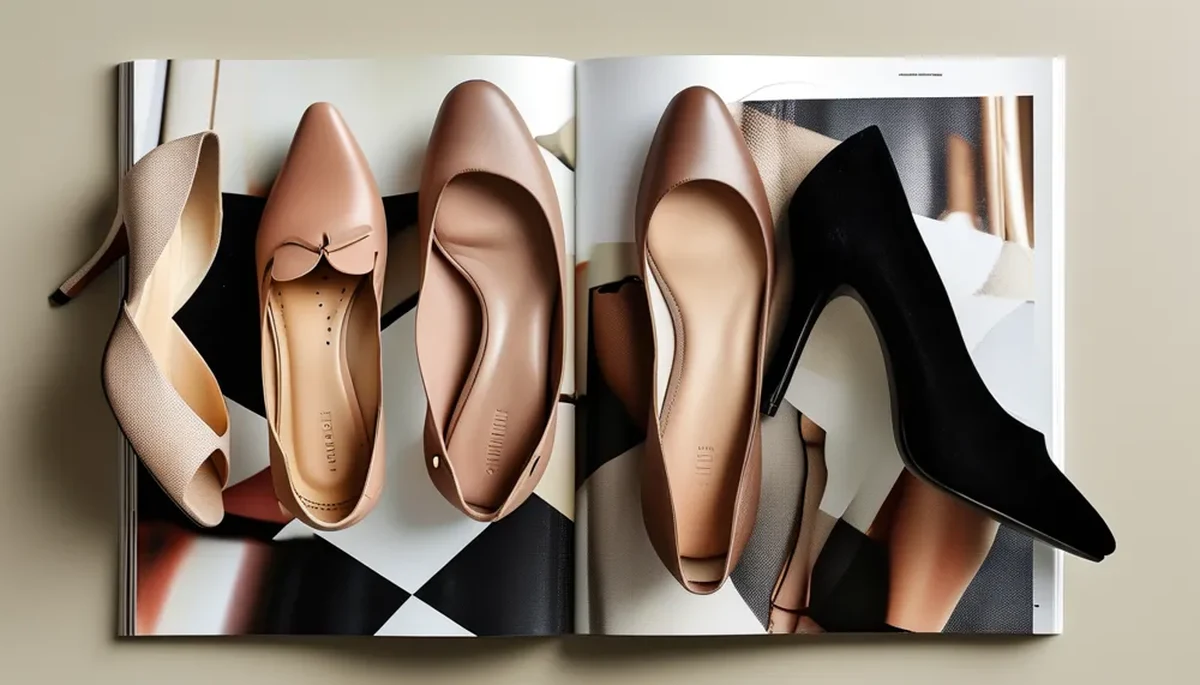
Block heels and kitten heels between 3 and 6cm, and the shape matters more than the number.
A block heel distributes your weight across a wide contact area rather than a single point, which is why you can genuinely wear one all day. A stiletto puts the same load through roughly a square centimetre, which is why you can’t.
Why block heels work so well:
- Stable on uneven ground — pavement gaps, decking, cobbles, grass
- The wide base means far less ankle stabilisation work, so your legs tire more slowly
- They pair with almost everything: wide-leg trousers, midi dresses, jeans, skirts
The height rule: past about 7cm, the angle at your forefoot becomes steep enough that comfort drops sharply regardless of heel shape. If you want height beyond that, a platform under the toe reduces the effective angle and buys you a couple of centimetres.
Kitten heels do similar work at a lower height and read more delicate. Both are genuinely wearable morning to night, which is a claim very few heels can support.
Can Sneakers Look Chic?
The right sneaker is arguably the chicest comfort shoe going — but the specification is narrow.
What works:
- Leather, not technical mesh. Leather reads refined; running-shoe mesh reads athletic, which is a different outfit
- Minimal branding. Small or no visible logo
- Neutral tone. White, cream, black, or grey
- Low profile. A slim silhouette rather than a chunky running sole, unless you’re deliberately going for the chunky look
Keep them clean and they’ll dress down tailoring and dress up denim in equal measure — a white leather sneaker with a suit is now entirely standard, and it’s more comfortable than any dress shoe.
What doesn’t work: an actual running shoe with a formal outfit. Technical performance sneakers look correct in athleisure contexts and incongruous with tailoring, and no amount of confidence fixes it.
5 Mistakes Everyone Makes Buying Comfortable Shoes
1. Trying shoes on in the morning. Feet swell through the day by up to half a size. Shop in the afternoon or your “perfect fit” becomes tight by 4pm.
2. Assuming leather will stretch to fit. Leather softens and moulds, but it doesn’t gain a size. If it’s genuinely too small in the shop, it will be too small forever.
3. Judging comfort by softness. A very soft, unstructured shoe feels lovely for ten minutes and offers nothing over four hours. Structure and support beat plushness for anything involving actual walking.
4. Ignoring the sole material. A thin leather sole transmits every impact from the pavement straight up. A rubber or rubber-lipped sole absorbs it, and it grips in rain — which leather notoriously doesn’t.
5. Buying one pair and wearing them daily. Shoes need 24 hours to dry out and decompress between wears. Rotating two pairs makes both last considerably more than twice as long.
What Details Should You Look For?
The features that decide whether a shoe is wearable for hours are mostly invisible from the outside.
- A cushioned footbed. Memory foam, poron, or a padded leather insole. Press your thumb into it in the shop — it should give slightly and spring back.
- A structured sole with arch support. The shoe should hold its shape when you pick it up rather than flopping.
- Quality upper material. Real leather or a good suede flexes with your foot and moulds over time. Stiff synthetics crease into ridges that press into you.
- A wide enough toe box. Your toes should be able to spread slightly. This is the single most common fit failure and the cause of most long-term foot complaints.
- A secure fit at the heel. A shoe that slips at the heel makes you grip with your toes all day, which is exhausting in a way that’s hard to trace back to the shoe.
For everyday wear, comfortable shoes and comfortable clothing work as a system — a supportive flat with high waist leggings or a straight trouser covers errands, work, and a long walk without a change.

Frequently Asked Questions
How do you break in new shoes without ruining a day out?
Wear them indoors for an hour or two at a time over several days before taking them out — this lets the leather mould without giving you blisters you’ll be nursing for a week. For specific tight spots, a shoe stretcher or a professional cobbler stretch is far more reliable than the thick-socks-and-hairdryer method, which mostly damages the leather.
Are expensive shoes actually more comfortable?
Sometimes, and not reliably. Price often buys better materials and construction, which does correlate with comfort — but plenty of expensive designer shoes are built for appearance alone, and plenty of mid-priced comfort brands invest heavily in the footbed. Judge by the specific features above rather than by price, and try before you commit where possible.
What shoes are best for standing all day?
A cushioned, structured shoe with a small heel — around 2–3cm — usually beats a completely flat one, because a slight heel takes some load off the Achilles and calf. Look for a thick shock-absorbing sole, a supportive footbed, and a secure heel fit. If you’re on your feet professionally and experiencing persistent foot pain, that’s worth a conversation with a podiatrist rather than another shoe purchase.
TL;DR:
- Three features decide comfort: cushioned footbed, structured sole, quality flexible upper
- Modern flats work — pointed toe, cushioned insole, toe box longer than your toes
- Block heels 3–6cm are the comfort sweet spot; past 7cm the forefoot angle kills it
- Sneakers: leather not mesh, minimal branding, neutral, low profile
- Shop in the afternoon when feet have swollen; leather softens but never gains a size
- Rotate two pairs — shoes need a day to dry and decompress between wears
Comfort and chic aren’t opposites anymore. A beautiful shoe you can’t walk in isn’t chic; it’s just decorative.
Keep Reading
This article is for general styling and informational purposes only. Trends, sizing, availability and pricing may vary by brand and season.