How to Wear Summer Sandals Into Early Fall Without Looking Confused
Quick Answer: Sandals stop reading as seasonal when the rest of the outfit stays summer too. Keep the sandal and change what it sits under - longer hems, heavier fabrics, autumn colours - and it reads as a deliberate transitional choice. Leather and suede sandals carry into autumn; raffia, cork, canvas and anything beachy do not. Closed-toe styles and thicker soles extend the window furthest.
The sandal is rarely the problem.
What is underneath and above it is what dates the outfit.
Why do sandals start looking wrong in September?
Because the eye reads the whole outfit for season, and a sandal under summer clothes reads as summer twice over.
Material carries most of the signal. Raffia, cork, rope and canvas are unambiguously warm-weather; leather and suede are not.
Sole thickness matters too. A thin flat sole reads summer; a thicker lug or stacked sole reads year-round.
Toe exposure is the smallest factor, which surprises people - a mostly-closed leather sandal reads almost like a shoe.
And light changes how everything looks. Autumn light is flatter, and pale summer materials look washed out in it in a way they did not in July.
Which means the fix is to change the context, not the shoe.
Which sandals actually transition?
Leather slides and mules, particularly in tan, cognac and black, which read as footwear rather than as holiday.
Suede anything, since suede is the most autumn-coded material there is.
Closed-toe or nearly-closed styles, including fisherman sandals and caged designs.
Chunky-soled sandals, where the sole does the seasonal work regardless of how open the upper is.
Block-heeled leather sandals, which work with trousers and midi hems into October.
And what does not transition: raffia, cork, rope, canvas, anything metallic and thin, and anything you wore to a beach.
How do you style them so it reads deliberate?
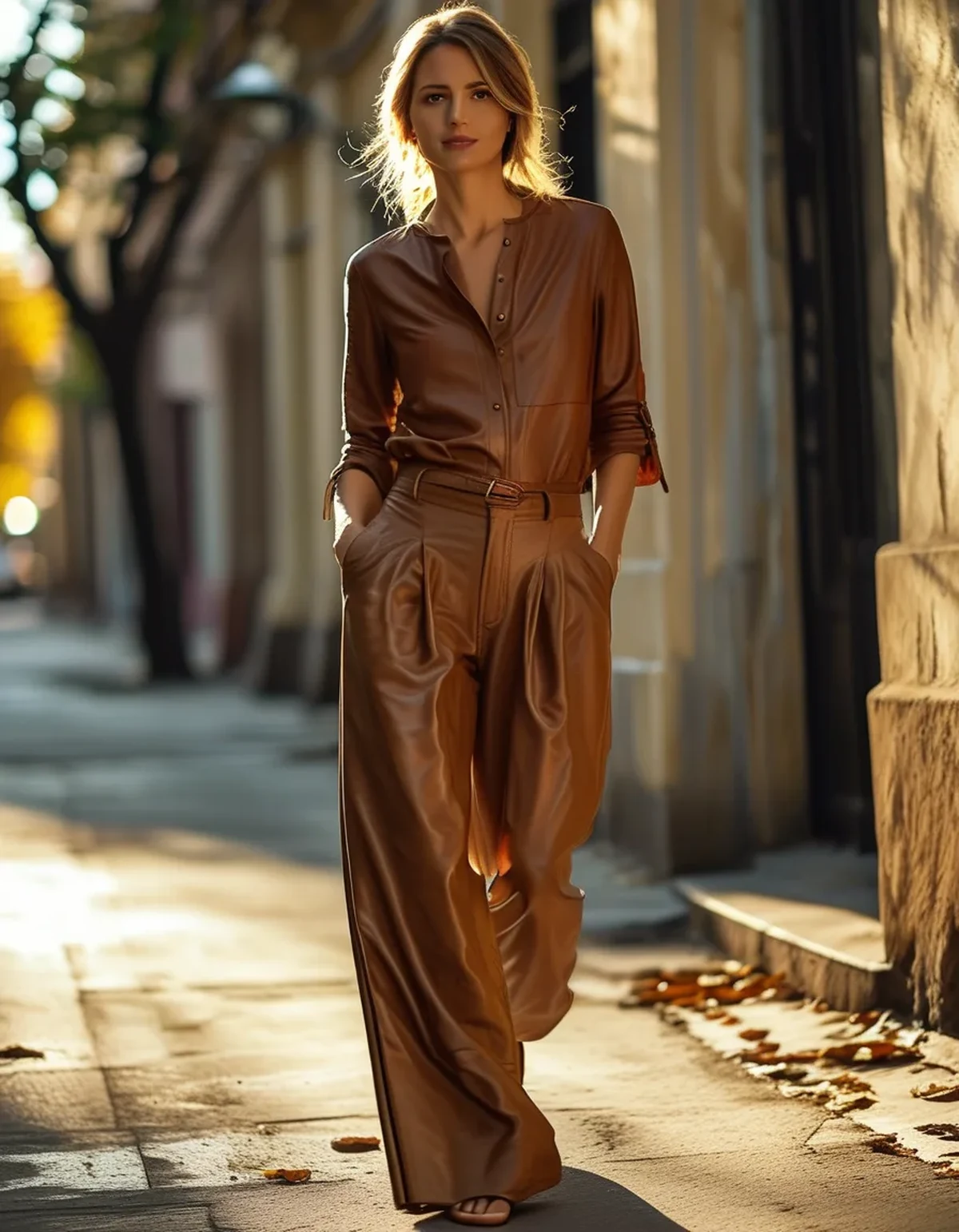
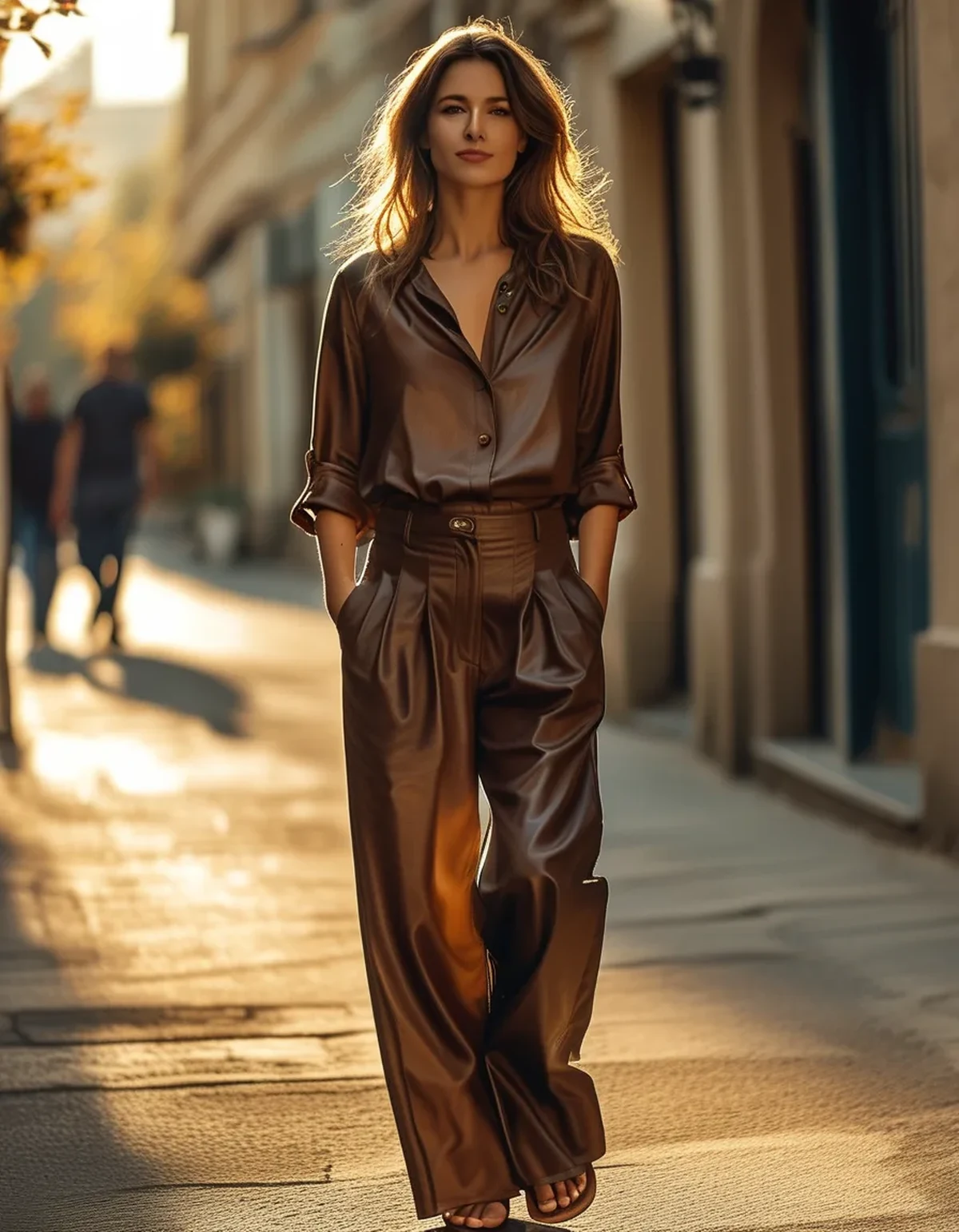
Longer hems. A sandal under a midi or a full-length trouser reads completely differently from one under a summer dress.
Heavier fabrics above. Denim, twill and knit over the top do the seasonal work that the shoe cannot.
Autumn colours, which cost nothing in warmth and shift the whole outfit.
A visible autumn layer - one jacket, one knit - which is often the only change needed.
And a socked sandal if you are willing, which is genuinely the most effective single move and remains divisive enough to be a real choice.
Pedicure maintenance matters more now than in July, unglamorously, because feet are being seen against darker clothing.
What Nobody Tells You About Transitional Footwear
Shoes are the most seasonally-marked garment you own and the last thing anyone plans. People agonise over whether it is too early for a coat and then leave the footwear decision until they are standing at the door. Yet the shoe changes an outfit’s apparent season more than any other single item, at no cost in temperature.
The socked sandal is not a joke and it is not new. It solves a genuine problem - warmth at the ankle, coverage against autumn light, extension of a shoe’s season - and it has been in and out of fashion for decades. Whether you like it is a matter of taste; whether it works is not really in question.
Closed shoes with bare ankles is the single best late-summer combination. A loafer or a low boot with no socks and cropped trousers reads autumn from a distance and is cooler than most sandals in practice, because the foot is shaded.
Feet swell across a warm day by a meaningful amount, which is why a sandal that fits at nine is tight at four. Buy warm-weather shoes in the afternoon, and if a strap has a buckle rather than elastic, that is a feature worth paying for.
Leather soles are the real end of sandal season, not the temperature. The first properly wet pavement makes a smooth leather sole genuinely unsafe, and that day arrives well before it gets cold. If your transitional shoes have leather soles, a cobbler can add a thin rubber half-sole cheaply.
And nobody notices as early as you fear. The self-consciousness about being the last person in sandals is almost entirely internal, and in the transitional weeks every option is visible on the same street at the same time.
FAQ: Transitional Sandal Questions, Answered
When should I actually stop wearing sandals?
When the ground is regularly wet, rather than when the air is cold. Wet pavements end sandal season more decisively than temperature does.
Which sandals last longest into autumn?
Leather or suede, closed or nearly-closed, with a thicker sole. Those three features together carry into October.
Are socks with sandals actually acceptable?
It is a taste question with a clear practical answer - it works, it extends the season and it is a genuine style position. Fine ribbed socks in a neutral read better than thick sport socks.
What is the best transitional shoe overall?
A leather loafer worn with bare ankles. It reads autumn, it is cooler than it looks, and it works with almost every hem length.
Why do my sandals feel tight by the afternoon?
Feet swell across a warm day. Buy in the afternoon and favour adjustable straps over elastic.
Should I put my sandals away on a date?
No. Put away the raffia and the cork, keep the leather out until the pavements turn.
TL;DR:
- Sandals read as summer when everything around them does - change the context, not the shoe.
- Leather, suede, closed-toe and thick-soled styles transition; raffia, cork, rope and canvas do not.
- Longer hems, heavier fabrics and autumn colours above do the seasonal work for you.
- Closed shoes with bare ankles is the strongest late-summer combination and costs nothing in heat.
- Wet pavements end sandal season, not cold air - and a rubber half-sole buys you weeks.
The sandal can stay. The rest of the outfit needs to move on.
Keep Reading
This article is for general styling and informational purposes only. Trends, sizing, availability and pricing may vary by brand and season.