Break-In Is Smaller Than You Think: What a Shoe Should Never Need
Quick Answer: Legitimate break-in is narrow: a sole learning to flex, an upper molding slightly to your foot shape, a heel counter softening its edge — days of mild stiffness, never pain. Pressure on toe knuckles, a heel that lifts or bites bone, numbness, or tightness across the widest part of the foot are fit errors, and no amount of wearing fixes them because leather stretches in width only slightly and in length essentially never. The rule: stiffness breaks in, pressure points do not.
The phrase break-in period has covered for more bad purchases than any other words in footwear.

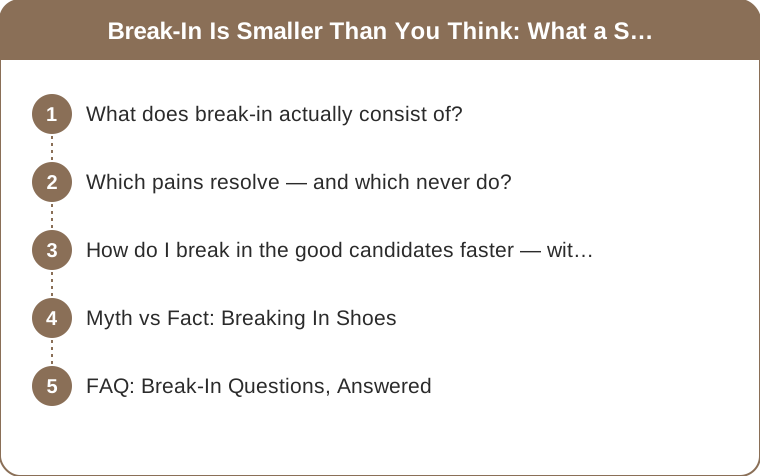
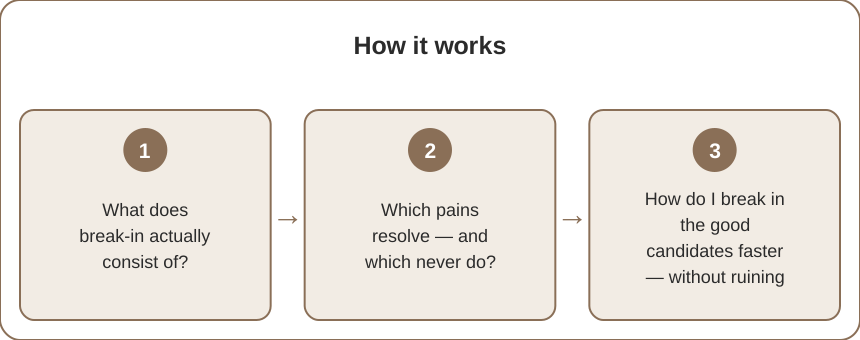
What does break-in actually consist of?
Three real mechanisms — and none of them is pain going away.
The sole learns to flex. A new leather or rubber sole is uniformly stiff; walking creases it at your personal flex point, just behind the toes. The first days of a quality shoe feel board-like for exactly this reason, and it resolves within a week of normal wear. This is the most legitimate break-in there is.
The upper molds — slightly. Leather is skin: under warmth and pressure it stretches across the width by a few millimeters and conforms to the bumps and slopes of your specific foot. This is why a good leather shoe at month two feels custom. The number matters, though: millimeters of width. Not length. Never length.
The footbed compresses into a map of you. Cork and cushioned footbeds take your weight print over the first weeks — heel cup deepening, arch impression forming. Comfort improves as support aligns to your actual foot.
What is not on this list: bones learning to tolerate pressure. Skin can callus; bone and nerve do not adapt to compression — they just report it louder, then go quiet in the bad way.
And synthetics barely break in at all. A synthetic upper at day thirty is the synthetic upper from day one with creases. If a synthetic shoe is not comfortable in the store, that is the finished product.
Which pains resolve — and which never do?
The map, zone by zone. Learn it and fitting rooms become fast.
Resolves with wear
General stiffness through the sole — the shoe fighting your stride for a few days. A firm heel counter edge rubbing slightly at the top line while it softens: manageable days one through five with the tricks below. A snug instep on laced shoes — lacing tension redistributes it. Suede and unlined leather hugging the width: this is the classic will stretch case, a half-size of squeeze that genuinely relaxes.
Never resolves
Toe knuckles pressing the ceiling of the toe box. The last is too shallow for your foot; leather does not grow upward under toe pressure. The little-toe corner burning at the widest point: the shoe is too narrow at the ball, and width stretch of a few millimeters will not cover a mismatch you can feel through the pain. Heel lifting with every step: heel-to-ball length is wrong for you; the blister is a symptom, the geometry is the disease. Any numbness or tingling: nerve compression, full stop, and the only fix is a different shoe. Pain across the top of the arch in a shoe with no laces to adjust: the vamp is cut low for your instep, permanently.
The ten-second store test: stand, weight even, and feel for any single point of pressure. Snugness everywhere is a candidate for break-in. Pressure somewhere is a no — today, and in six months.

How do I break in the good candidates faster — without ruining them?
The goal is targeted softening, at home, while the return window stays open.
Wear them indoors on carpet for two or three evenings, an hour at a time. This is the whole method for most shoes: warmth and motion do the molding, and soles stay pristine enough to return if a hidden pressure point emerges. The return window is part of the break-in plan.
Thick socks accelerate width molding on leather. An evening of thick socks in loafers or derbies presses the width out gently and evenly — two or three sessions equal a couple of weeks of ordinary wear. Skip this with delicate or unlined uppers, which can distort.
A spot-stretcher beats a full stretcher. For one tight point — a bunion corner, a little-toe hotspot — a two-way stretcher with a bunion plug applied overnight gives millimeters exactly where needed. Stretching spray or a light leather conditioner first makes the fibers cooperate.
Soften a biting heel counter with your thumbs. Ten slow bends of the counter edge — rolling the top line outward slightly — plus a dab of conditioner takes the edge off the first week. Pair with a blister patch on your skin for the first two real wears; prevention beats treatment by a mile.
Leave the folklore alone. Hairdryers cook leather and craze the finish; freezer bags of water strain seams and glue; soaking wet-wear molds the shoe but also the beginnings of its decay. Every fast trick that involves extremes trades a week of patience for years of shoe life.
Myth vs Fact: Breaking In Shoes
Myth: Quality shoes are supposed to hurt at first. Fact: quality shoes are often stiff at first — structured counters, real soles, dense leather. Stiff is effortful; hurt is localized. The moment discomfort has an address — a toe, a bone, one spot on the heel — it is a fit problem wearing a quality costume.
Myth: Everything stretches eventually. Fact: lined leather gives millimeters in width, synthetics give almost nothing, and no upper on earth gives length. The stretch budget is real but tiny — spend it on softening a snug width, never on rescuing a wrong size.
Myth: Buy tight, because shoes loosen with age. Fact: buy right. Feet also swell through every single day, which cancels most of the loosening. The correct new-shoe fit is snug hold at heel and instep, a thumb of space at the toe, zero pressure points — from the first minute.
Myth: Blisters are a normal phase. Fact: a blister is friction data. One early blister at the heel while a counter softens is within normal; blisters recurring in the same spot after week one are the shoe voting no permanently.
Myth: Break-in applies equally to all shoes. Fact: it is a leather-and-structure phenomenon. Sneakers, knit uppers, and soft flats should be near-perfect out of the box — a sports shoe that needs breaking in is simply the wrong shoe.
FAQ: Break-In Questions, Answered
How long should break-in take for a quality leather shoe?
A week to two of regular wear for stiffness to resolve, a month for the footbed to fully map you. If comfort is not clearly improving by the end of week one, stop accumulating wear and reassess while options remain.
Can a cobbler fix a shoe that is slightly too tight?
For width, often yes — professional stretching gains more than home tools, and a good cobbler will tell you honestly whether the shoe has the margin. For length or a shallow toe box, no one can help; that shoe is done.
What about the opposite — a shoe slightly too big?
Easier to rescue than tight: a full cushioned insole takes up a half size, a tongue pad snugs the instep, heel grips stop lift. A full size of slop, though, changes your gait and is not worth engineering around.
Do I need to break in shoes before a big event?
Always, and the number is three wears minimum — two home evenings plus one real outing. An event is hours of standing on day-one shoes otherwise, and even a perfect fit deserves a flexed sole and a softened counter before it faces a wedding.
TL;DR:
- Real break-in is a sole learning to flex, slight width molding, and a footbed mapping your weight — days of stiffness, never pain.
- Pressure with an address — toe knuckle, little-toe corner, heel bone, numbness — is a fit error no amount of wearing fixes.
- Break in candidates indoors on carpet while the return window is open; thick socks and spot-stretchers beat every hairdryer trick.
- Leather gives millimeters of width and zero length; synthetics are finished products in the store.
Stand in any new shoe and ask one question: is this snug everywhere, or does the discomfort have an address? Everywhere softens. An address never moves.
Keep Reading
This article is for general styling and informational purposes only. Trends, sizing, availability and pricing may vary by brand and season.