Clean Shoes, Full Wardrobe: The Ten-Minute Shoe Care Habit
Quick Answer: Ten minutes on a Sunday covers it. Wipe and brush every pair you wore that week, condition leather monthly, hit sneaker midsoles with a melamine sponge, brush suede dry and never wet, and — the biggest lifespan multiplier of all — never wear the same pair two days running. Clean shoes are the loudest single signal that an outfit was considered, and the cheapest one to send.
Your shoes are the last thing anyone’s eye lands on, and the first thing they judge.
Which is a slightly unfair arrangement, because scuffed shoes will undercut a genuinely good outfit — while immaculate cheap shoes sail straight through.
The whole maintenance habit takes ten minutes a week. Here it is, material by material.
Why Do Shoes Carry So Much of the Read?
Because the eye audits top-down and finishes at the floor.
Shoes are the last impression, and unlike a jacket or a bag, they show wear in a way that’s unmistakable — creased leather, greying midsoles, a heel worn down at an angle. Those read as neglect, and neglect is a much louder signal than price.
This is the maintained-beats-expensive rule at its strongest. A £40 pair kept immaculate genuinely outperforms a £300 pair that’s scuffed and dusty, every single time.
The interview-and-first-date folklore about people checking your shoes is directionally true, if slightly overstated. What people are actually reading isn’t cost — it’s care, and shoes are simply where care is most visible.
What’s the Routine for Each Material?
Ten minutes on Sunday, split across whatever you wore that week.
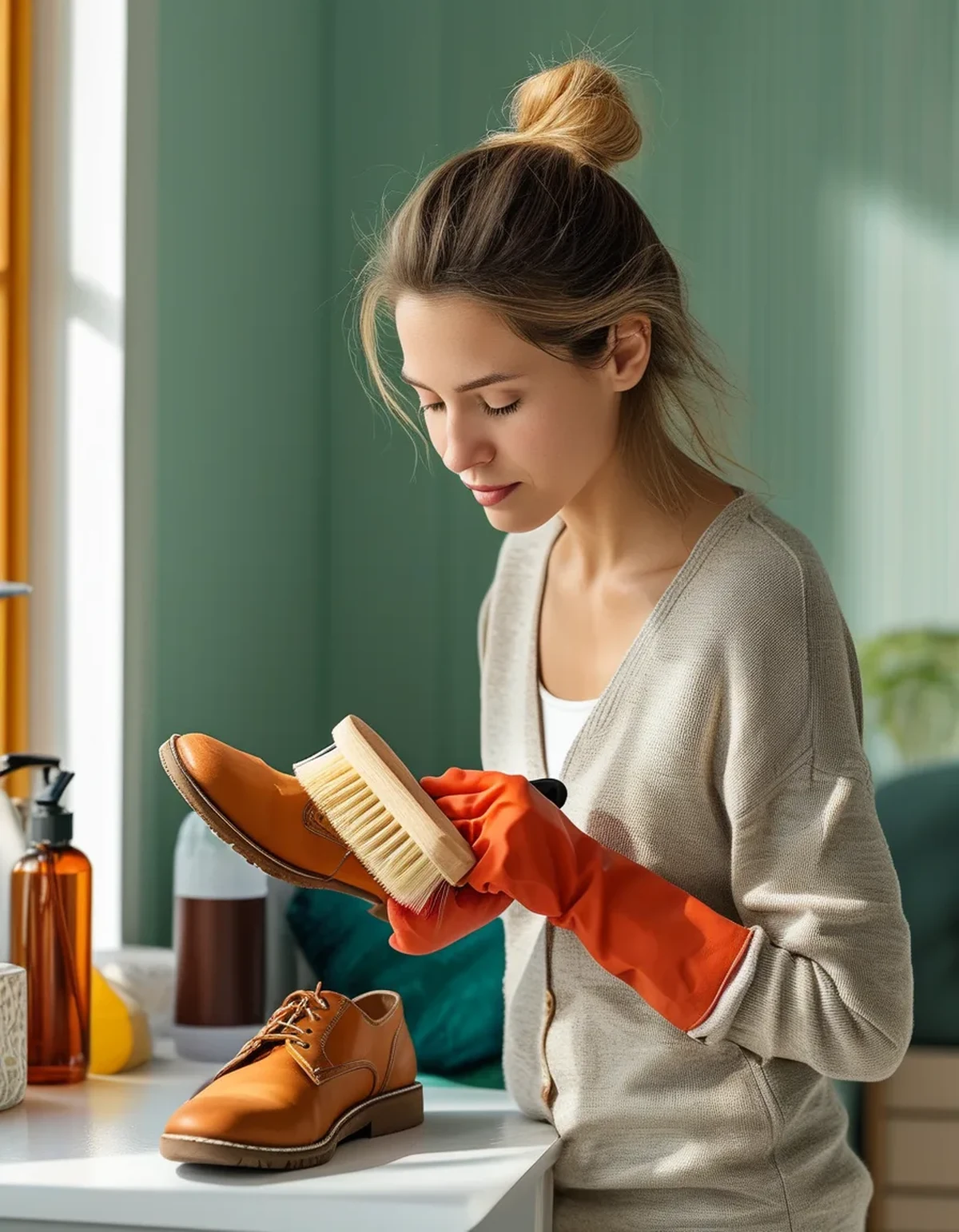
Leather. Wipe with a slightly damp cloth to lift dust — grit is abrasive and it’s what ages leather fastest. Condition monthly with a cream conditioner; leather is a skin and it dries and cracks without it. Polish over scuffs as needed. A tin of good cream costs very little and lasts years.
White sneakers. Two moves do 90% of the work: a melamine sponge (magic eraser) on the rubber midsoles, which is transformative and takes 90 seconds a pair, and laundering the laces — throw them in a mesh bag with a white wash, or soak them in warm soapy water. Grey laces make a clean shoe look dirty. For the uppers, mild soap and a soft brush; let them air dry away from direct heat.
Suede. Water is the enemy. Brush dry with a suede brush to lift the nap, and use a suede eraser block on marks — rub gently, then brush again. Protect with a suede spray when new and every few months after. Never scrub suede wet; you’ll flatten the nap permanently.
Canvas. The most forgiving. Most canvas sneakers survive a cold, gentle machine cycle in a mesh bag, laces out, insoles out, air-dried. Check the brand’s guidance first if they’re expensive.

Why Should You Rotate Your Shoes?
Because this single habit extends lifespan more than everything else on this page combined.
Never wear the same pair two days in a row. Feet release a surprising amount of moisture into a shoe over a day, and it takes roughly 24 hours for the interior to dry fully. A shoe worn daily stays damp, which degrades the lining, breaks down cushioning faster, and produces odor.
Rotating means a two-pair minimum per role — two work shoes, two everyday sneakers. That isn’t indulgence, it’s arithmetic: two pairs rotated last considerably more than twice as long as one pair worn daily.
Two supporting moves:
Cedar shoe trees for anything leather. They absorb moisture and hold the shape against creasing, and they’re the highest-return £15 in shoe care.
Weather assignment. Designate a rain pair — something with a sealed sole and a material that doesn’t care. Suede stays home when the forecast has an opinion.

5 Mistakes Everyone Makes With Shoe Care
- Drying wet shoes on a radiator. Direct heat cracks leather and unglues soles. Stuff them with newspaper and dry them at room temperature, away from the heat source. It takes a day and it saves the shoe.
- Scrubbing suede when it’s wet. Let it dry completely first, then brush. Wet-brushing mats the nap and there’s no undoing it.
- Machine-washing leather or structured sneakers. The drum destroys the glue and the shape. Leather sneakers get wiped and conditioned, not laundered.
- Waiting until the sole is gone to resole. A resole decided early costs roughly half what it costs once the welt or the midsole has worn through. A cobbler check twice a year catches it.
- Skipping the insides. Interiors get ignored entirely. Pull the insoles out to air weekly, and replace them once a year on shoes you wear hard — new insoles make old shoes feel new for very little money.
How Do You Make It Automatic?
Three habits, in descending order of effort.
The Sunday ten minutes. Line up every pair you wore that week. Brush, wipe, assess. Condition anything leather if it’s the first Sunday of the month. Put on a podcast; it’s genuinely pleasant.
The entryway wipe station. A cloth and a brush by the door. Thirty seconds when you take shoes off beats ten minutes of rescue work later, and it’s the version that survives busy weeks.
The twice-yearly cobbler check. Heels and soles, assessed by someone who knows. Heel tips are cheap and replacing them before they wear into the sole saves the whole shoe.
Ten minutes a week and the entire wardrobe reads better from the ground up.
Frequently Asked Questions
How often should you clean your shoes?
A quick wipe or brush after each wear takes seconds and prevents most problems. A proper clean weekly for shoes in rotation, conditioning for leather monthly, and a protective spray on suede every few months. Anything that’s actually muddy or salt-stained gets dealt with the same day — road salt in particular will damage leather if it’s left on.
Can you put sneakers in the washing machine?
Canvas sneakers usually survive a cold gentle cycle in a mesh bag with the laces and insoles removed, air-dried afterward. Leather, suede, and structured running shoes should not go in — the agitation and moisture break down adhesives and cushioning foam. When in doubt, hand-clean with mild soap and a soft brush.
Are expensive shoes actually better?
Better constructed ones are, and construction is what matters for longevity — a welted or stitched sole can be resoled repeatedly, while a glued sole usually can’t. But a well-maintained mid-price shoe will outlast and out-look a neglected expensive one, so if you’re choosing where to spend, spend on construction and care rather than on the label.
TL;DR:
- Shoes are the last thing the eye reads, and they display care rather than cost.
- Leather: wipe weekly, condition monthly. Sneakers: melamine sponge on midsoles, launder the laces.
- Suede: brush dry, eraser block for marks, never wet-scrub. Canvas: cold gentle cycle.
- Never wear a pair two days running — 24 hours to dry is the biggest lifespan multiplier there is.
- Cedar trees for leather, a designated rain pair, and no radiator drying ever.
- Cobbler check twice a year; an early resole costs about half a late one.
Keep Reading
This article is for general styling and informational purposes only. Trends, sizing, availability and pricing may vary by brand and season.