The Shoe Color Rule That Instantly Makes Any Outfit Look More Put Together
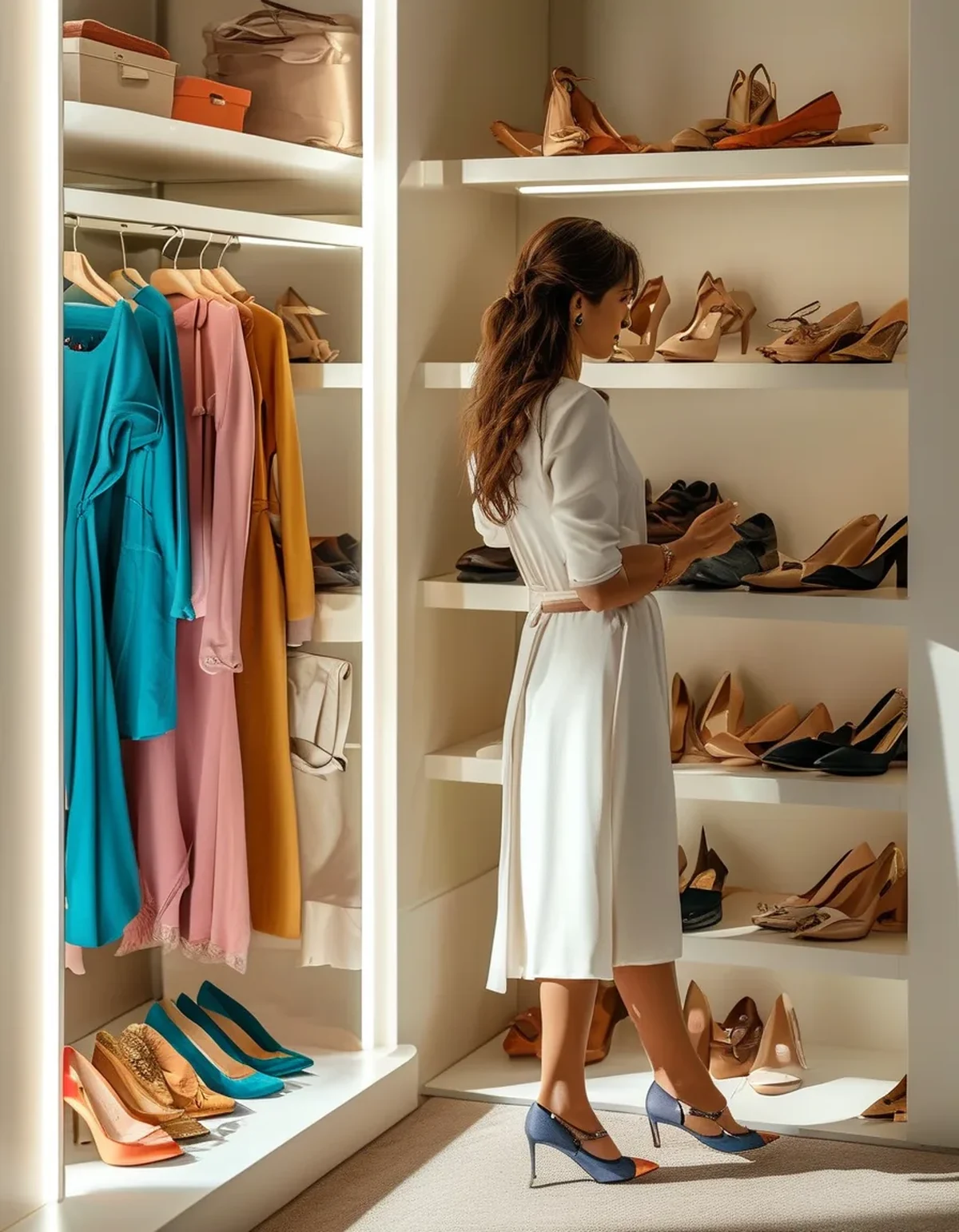
Quick Answer: Match your shoe color to the darkest neutral already in your outfit, not to your bag. This anchors the look visually from the ground up and works across nearly any color combination, unlike bag-matching, which only works when the bag and shoes are the sole accent colors.
The old rule of matching shoes to your bag creates a coordinated look, but it falls apart the moment your outfit has more than one accent color. There’s a rule that scales better.
Why does matching the darkest neutral work better than matching the bag?
Because the darkest neutral in an outfit — usually your trousers, a dark bag, or a deep-toned top — functions as the outfit’s visual anchor point regardless of what else is going on color-wise. Shoes in that same tone extend the anchor down to the floor, making the whole look read as intentional even with several other colors in play.
Bag-matching only works cleanly in simpler outfits. Once you add a patterned top, a colorful scarf, or layered pieces, matching shoes to a specific accessory stops being the strongest coordinating move — matching the darkest neutral still works regardless.
How do you find the ‘darkest neutral’ in a busy outfit?
Look at your outfit and identify whichever neutral tone — black, navy, brown, grey — takes up the most visual space or sits lowest (like trousers or a skirt). That’s usually your anchor. If you’re wearing a patterned dress with no clear neutral, default to whichever neutral color appears anywhere in the pattern, even as a small accent.
When genuinely no neutral is present at all (an all-bright-color outfit), a nude or tan shoe close to your own skin tone becomes the safest anchor — it acts as a visual continuation of your leg line instead of introducing a new color entirely.

The same bridging logic works above the ankle too: one shared tone can tie together pieces that otherwise refuse to match, which is the idea behind the color bridge trick for pieces that do not match.
And if the color you are trying to match is this year’s headline shade, it helps to know how to wear 2026’s big color trend without it aging your wardrobe before you buy shoes to go with it.
Myth vs Fact: Shoe Color Matching
Myth: Shoes always need to match the bag for a coordinated look. Fact: Bag-matching is one valid option, not the only rule — darkest-neutral matching works across more outfit types, especially busy or multi-color ones.
Myth: Nude shoes are boring and should be avoided. Fact: A well-matched nude shoe is one of the most versatile anchor options available precisely because it doesn’t compete with anything — it’s a tool, not a compromise.
Myth: Bright shoes always make an outfit more fun. Fact: A bright shoe works best as the one accent color in an otherwise neutral outfit — paired with an already colorful outfit, it usually competes rather than complements.
FAQ: Shoe Color Questions, Answered
What color shoes go with a busy printed outfit?
Find the darkest neutral within the print itself and match to that — it grounds the whole look without introducing a new color to compete with the pattern.
Are black shoes ever wrong with a navy outfit?
Black and navy can clash slightly up close but usually read fine head-to-toe from a normal viewing distance — if you want a cleaner match, a navy or dark brown shoe is the safer anchor choice.
Should shoe color match a coat, even if the outfit underneath is different colors?
Yes, if the coat is the dominant visual layer (which it usually is) — treat it as the outfit’s darkest neutral if it’s dark, and anchor your shoes to it.
TL;DR:
- Match shoes to the darkest neutral in the outfit, not just the bag — it works across more outfit types
- No clear neutral present? A nude or tan shoe near your skin tone is the safest anchor
- Bright shoes work best as the single accent in an otherwise neutral outfit
- A dark coat usually counts as the outfit’s anchor — match shoes to it when it’s the dominant layer
Anchor from the ground up, and busy outfits stop feeling like a coordination puzzle.
Keep Reading
This article is for general styling and informational purposes only. Trends, sizing, availability and pricing may vary by brand and season.