Swapping the Insole Changes the Shoe Size — Here Is How Much
Quick Answer: A full-length cushioned insole typically takes up between a third and a half of a size in volume, which means a shoe that fit correctly before will feel tight after. The fix is either to remove the shoe’s existing footbed first — many shoes have a glued or loose liner that can come out — or to use a three-quarter length or heel-only insert that adds support without filling the toe box. Buying a half size up specifically to accommodate an insole works, but only if you do it at purchase, not afterwards.
This is the most common reason a comfort insert makes a shoe less comfortable.

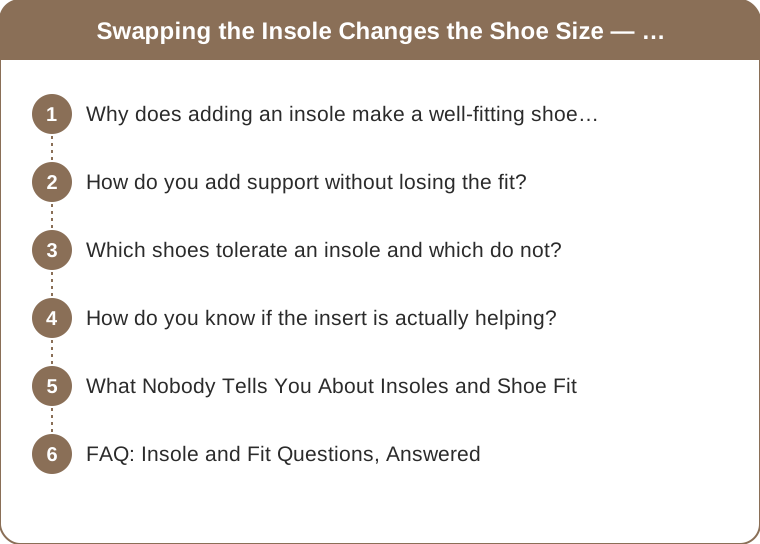
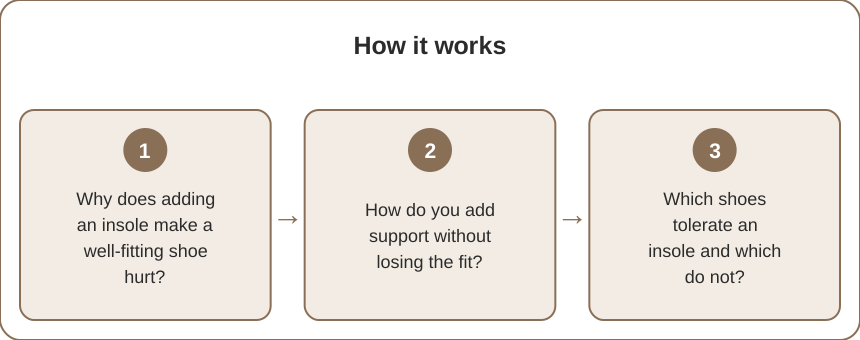
Why does adding an insole make a well-fitting shoe hurt?
Because you have reduced the internal volume without changing anything about the shape.
A shoe is a fixed container. Adding material to the bottom lifts your foot upward into the parts of the shoe that were previously giving you clearance — the toe box height, the instep, and the throat opening where the laces or strap sit.
The pressure appears in three predictable places. The top of the toes, because you have raised them into the vamp. The instep, because the arch of your foot now sits higher against the upper. And the heel, because a lifted foot sits shallower in the heel cup and can slip.
The frustrating part is that the length feels the same, so people conclude the shoe was always slightly wrong rather than that the insert changed it. A full-length foam insole of typical thickness takes up roughly the volume of a third to half a size, which is enough to move a good fit into a bad one.
This is also why an insert that transforms one pair can ruin another. It depends entirely on how much vertical clearance the original shoe had.
How do you add support without losing the fit?
In order of how much volume they cost you:
Remove the existing footbed first. Many shoes — sneakers, most trainers, a good number of loafers and flats — have a removable liner that lifts straight out. Take it out, put the new insole in its place, and you have replaced volume rather than added it. This is the correct first move and most people skip it. Check by pulling firmly at the heel end of the interior liner.
Use a three-quarter length insole. These stop before the toes, so they add arch and heel support without touching the toe box, which is where most of the pain shows up. They cost roughly a quarter of the volume of a full-length version.
Use a heel cup or heel pad only. Minimal volume, and it addresses heel slip and heel-strike cushioning specifically.
Use metatarsal or arch pads. These are small, adhesive, and targeted, adding support at a single point with almost no volume cost.
Buy the shoe half a size up on purpose if you know you will always wear an orthotic. Do this at purchase, with the insert in your hand, in the shop.
Which shoes tolerate an insole and which do not?
Tolerant: sneakers and trainers, most of which are built with a removable liner and generous internal volume. Ankle boots with laces, because the lacing adjusts to changed volume. Lace-up brogues and derbies for the same reason. Anything with a removable footbed, by definition.
Difficult: ballet flats, which have almost no vertical clearance and where an insole pushes the foot up and out of the shallow topline, causing slipping and heel gape. Court shoes and pumps, same problem plus a steeper pitch. Mules and backless styles, where added height at the footbed makes the foot slide forward.
Impossible in practice: most sandals, since the strap positions are fixed to a specific footbed height. Anything already snug over the instep.
A note on heels specifically: in a heeled shoe your weight is already pushed forward into the toe box, so there is less spare room than the length suggests. A full-length insole in a heel almost always causes toe pressure. A metatarsal pad, placed just behind the ball of the foot, is the correct intervention there and it addresses the actual problem, which is forefoot pressure rather than arch support.

How do you know if the insert is actually helping?
Give it a real trial and judge it on specific signals, not on how it feels in the first ten minutes.
Wear it for a full day, twice. Support changes take time — a new arch support often feels odd initially and correct after a few days, and the reverse is also true.
Good signs: less end-of-day arch ache, less heel-strike soreness, the shoe feeling more stable side to side.
Bad signs that mean stop: numbness or tingling anywhere, a new blister at the top of the toes or across the instep, heel slipping that was not there before, or pain that has moved to a new location rather than reduced.
Pain in a new place is the key warning. It usually means the insert has changed the geometry of the shoe rather than supported your foot.
Check the wear pattern after a month. If the sole is wearing more unevenly than before, the insert is changing how you strike the ground, which may or may not be intentional.
And the obvious caveat: persistent foot pain, numbness, or pain that wakes you is a reason to see a podiatrist rather than to buy a different insert. This is general information, not medical advice.
What Nobody Tells You About Insoles and Shoe Fit
Feet change size through the day and through the years. They swell measurably by evening and they widen and lengthen slightly with age. A shoe fitted in the morning at 25 is not the same fit at 6pm at 45, which is often the real reason an old favourite started needing an insert.
Insoles compress. A foam insert loses a meaningful amount of its thickness within a few months of daily wear, which means the fit changes again — the shoe loosens back up and the support quietly disappears. This is why the same insert seems to work and then stop.
Two shoes marked the same size differ in internal volume depending on the last they were built on. This is why the identical insert works in one pair and not another from the same brand.
The heel counter matters more than the footbed for stability. A shoe whose heel collapses when you press it will not become supportive with any insole.
A cheap insert in a good shoe beats an expensive insert in a bad one. If the shoe is fundamentally the wrong shape for your foot, no insole fixes it, and the money is better spent on a shoe that fits.
FAQ: Insole and Fit Questions, Answered
Should I size up when buying shoes I will put orthotics in?
Yes, usually half a size, and bring the orthotic to the fitting. Sizing up without the insert present is guesswork and often overshoots.
Can I trim a full-length insole to fit?
Most are designed to be trimmed at the toe, and there is usually a cutting guide printed on the underside. Trace the shoe’s original liner if you have it, and cut slightly large before testing.
Why do my heels slip after adding an insole?
Because your foot now sits higher and shallower in the heel cup. A heel grip pad or a three-quarter insole instead of a full-length one usually solves it.
Do expensive insoles work better?
Custom orthotics prescribed for a specific issue are a different product from retail cushioning, and they are worth it for a diagnosed problem. Among retail options, price correlates more with materials and durability than with how much they will help you.
TL;DR:
- A full-length insole costs you roughly a third to half a size in volume, which is why it can ruin a good fit.
- Remove the shoe’s existing liner first — many shoes have one, and replacing beats adding.
- Use three-quarter, heel-only, or metatarsal pads when volume is tight, especially in heels and flats.
- Sneakers and lace-ups tolerate inserts; ballet flats, pumps, and mules generally do not.
- Pain in a new location means stop, and foam inserts compress within months so the fit shifts again.
The short version is that an insole is a fit change, not just a comfort addition. Treat it as one and it will do what you wanted it to.
Keep Reading
This article is for general styling and informational purposes only. Trends, sizing, availability and pricing may vary by brand and season.