Why Wearing the Same Shoes Every Day Wears Them Out Faster Than You'd Think
Quick Answer: Shoes need roughly 24 hours to fully dry out and let cushioning materials recover their shape after a day of wear, and skipping that recovery time by wearing the same pair daily compresses cushioning permanently faster and traps moisture that accelerates material breakdown — rotating between at least two to three pairs used regularly extends each pair’s usable lifespan meaningfully.

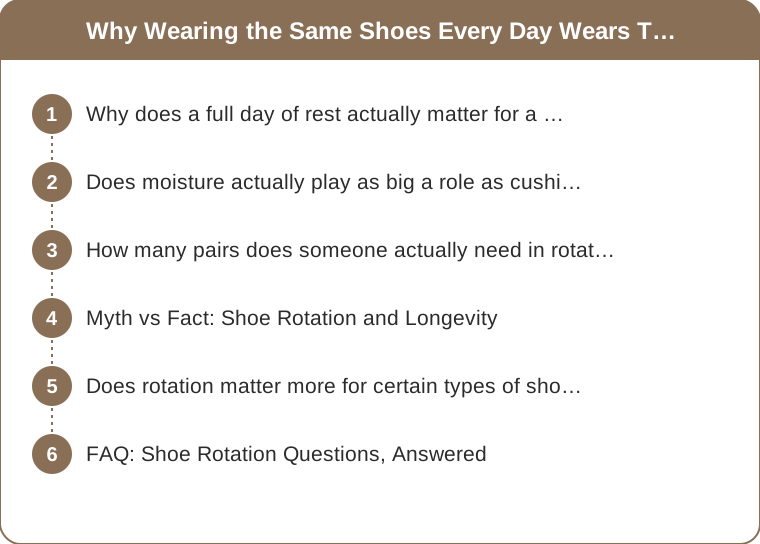
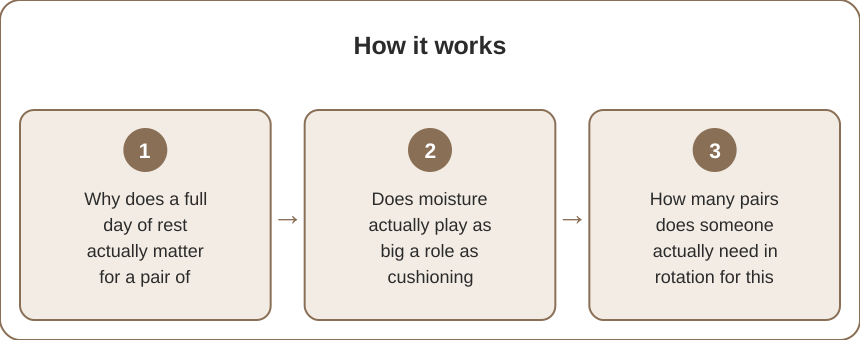
Why does a full day of rest actually matter for a pair of shoes?
Foam and cushioning materials in most shoes compress under the weight and movement of a day’s wear, and need time without pressure to fully rebound to their original shape — a recovery process that typically takes about 24 hours. Wearing the same pair again the next day, before that recovery completes, means the cushioning starts each new day already slightly compressed, which compounds over time into permanently reduced cushioning and support well before the shoe would otherwise wear out.
Does moisture actually play as big a role as cushioning compression?
Yes, genuinely — feet release moisture throughout a day of wear, and shoes need real drying time to fully release that trapped moisture from insoles and lining materials. Wearing damp, incompletely dried shoes repeatedly accelerates material breakdown (particularly in leather and certain synthetic linings) and creates a more hospitable environment for odor-causing bacteria, which compounds the wear problem with a second, separate issue.
How many pairs does someone actually need in rotation for this to matter?
Two to three pairs in regular rotation is generally enough to give each pair adequate recovery time between wears for a typical daily-wear schedule, without needing an extensive shoe collection. The specific number matters less than the principle — having at least one alternate pair to genuinely alternate with, rather than one primary pair worn essentially every single day without a break.

Myth vs Fact: Shoe Rotation and Longevity
Myth: Only athletic or workout shoes need rotation — everyday shoes are fine worn daily. Fact: The cushioning-recovery and moisture principles apply to most shoe types, including everyday flats and sneakers, though the effect is often most pronounced and noticeable in athletic shoes specifically due to more intense compression during exercise.
Myth: Rotating shoes is really just about having more variety, not actual durability. Fact: While variety is a nice side benefit, the recovery-time mechanism is a genuine material-science reason rotation extends usable lifespan, independent of style variety.
Myth: Expensive, high-quality shoes don’t need rotation the same way cheaper shoes do. Fact: Cushioning and material recovery time apply regardless of price point — quality construction affects overall durability, but doesn’t eliminate the benefit of rest between wears.
Does rotation matter more for certain types of shoes than others?
Athletic and running shoes benefit most noticeably, since their cushioning experiences the most intense, repeated compression during exercise specifically, making the recovery-time effect more pronounced and more directly tied to injury-prevention as well as longevity. Structured leather shoes benefit from rotation primarily through the moisture and material-flexing angle rather than cushioning recovery specifically, since they generally have less foam cushioning to begin with.
FAQ: Shoe Rotation Questions, Answered
Is it worth buying a second pair of the exact same shoe just to rotate?
For a genuinely well-loved pair, some people do this specifically, though rotating between different styles that serve a similar purpose works just as well for the recovery benefit.
How long does full moisture drying actually take compared to cushioning recovery?
Both are commonly cited around the 24-hour mark, though very humid climates or heavier sweating can extend the moisture drying time somewhat beyond that.
Does rotation actually reduce the risk of foot or joint issues, not just shoe wear?
For athletic shoes specifically, some research connects worn, overly compressed cushioning to increased impact stress on joints, so rotation’s benefit extends somewhat beyond just the shoes’ own lifespan.
TL;DR:
- Cushioning materials need about 24 hours to fully recover shape after a day of wear
- Moisture trapped in shoes needs real drying time, and skipping it accelerates material breakdown
- Two to three pairs in regular rotation is generally enough to give each pair adequate recovery time
- Athletic shoes benefit most noticeably, given how intensely their cushioning compresses during exercise
Rotating shoes isn’t really about variety for its own sake — it’s giving each pair the recovery time that quietly determines how long it actually lasts.
Keep Reading
This article is for general styling and informational purposes only. Trends, sizing, availability and pricing may vary by brand and season.