How You Store Your Shoes Decides How Long They Keep Their Shape
Quick Answer: Leather shoes lose shape because they are stored damp, folded, or with no internal support. The three highest-return fixes are cedar shoe trees for leather shoes, boot shapers or a rolled magazine for tall shafts, and a full day of rest between wears so the interior dries. Everything else — polish, weatherproofing, resoling — matters less than these three for how a shoe looks in year three.
A shoe collapses at the ankle, creases across the toe, and slumps at the shaft. None of that happens while you are walking.

What actually deforms a shoe in storage?
Three mechanisms, and moisture drives all of them.
Leather takes a set when it dries. A foot puts moisture into a shoe over a day. Leather that dries in a creased position holds that crease permanently — the fibers reorganize as they lose water. This is why the deepest toe crease appears not from walking but from a shoe drying folded overnight.
Unsupported uppers collapse under their own weight. A boot shaft with nothing inside falls sideways and creases at the ankle. Every day it stays folded, the crease deepens.
Heat accelerates everything. A shoe dried near a radiator loses moisture from the leather itself, not just the interior, which makes it brittle and stiff. The crease then becomes a crack.
And there is a slower fourth mechanism: adhesive fatigue. Sole adhesives degrade faster in warm, damp conditions. A cupboard against a warm wall or in a bathroom is genuinely worse for shoes than a cool hallway, and it is the reason shoes stored for a summer sometimes separate at the sole on their first autumn wear.
What is the minimum viable routine?
Four habits, none of which takes more than a minute.
Rest a day between wears
The single highest-return habit on this list. A shoe needs roughly twenty-four hours for the interior to dry fully. Wearing the same pair on consecutive days means it never dries, and the leather stays soft and deformable while it is being flexed.
Use cedar trees for leather shoes
Cedar absorbs moisture and the tree holds the shape while it dries. Put them in while the shoe is still warm, which is when the leather is most willing to reshape. Plastic trees hold shape but do nothing for moisture; cedar does both.
Support tall shafts
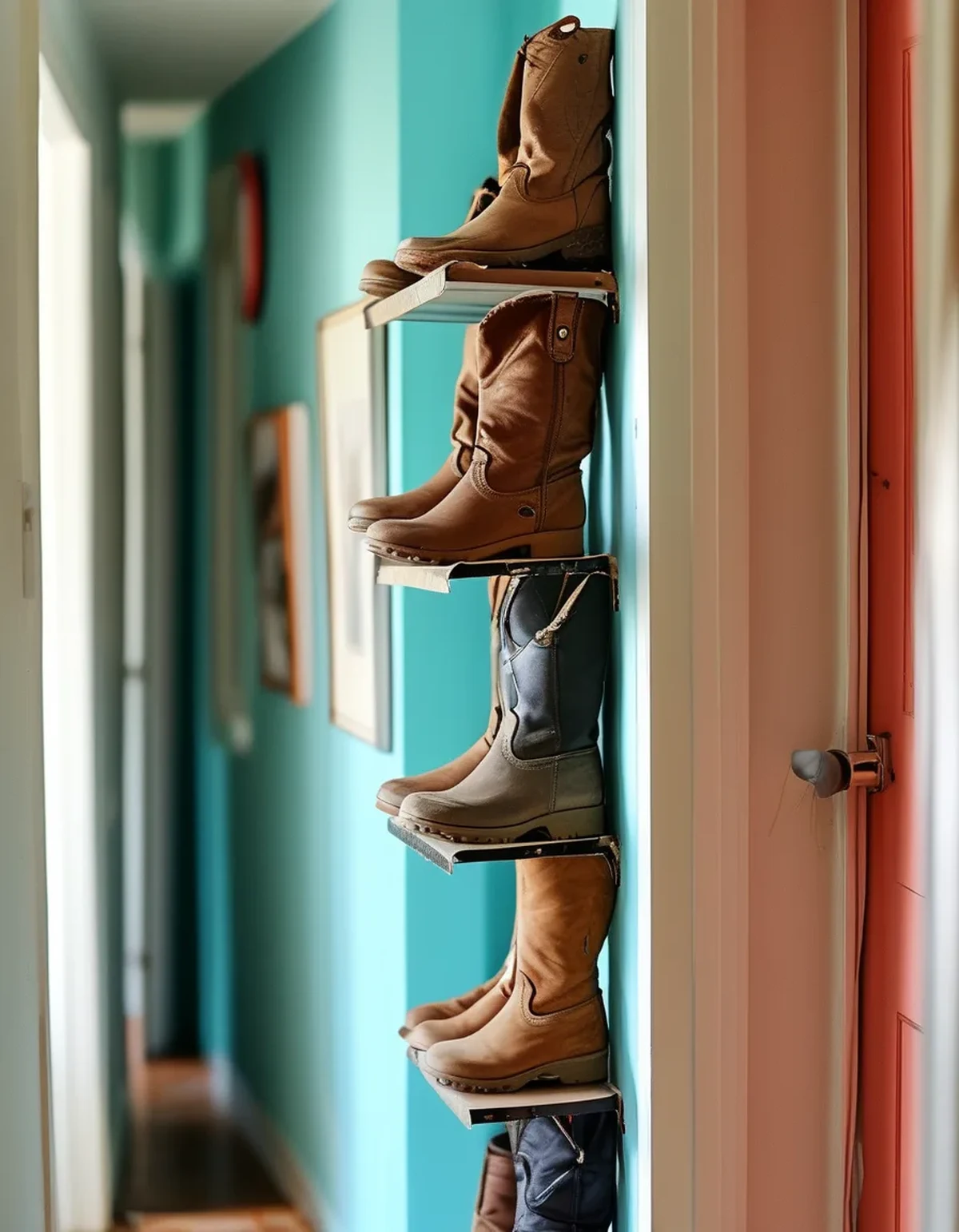
Boot shapers work, and so does a rolled magazine or a cut section of a pool noodle. The mechanism is the same: keep the shaft vertical so it cannot crease at the ankle. Hanging boots by clips is the other good option.
Store cool, dry, and out of direct light
Not near a radiator, not in a sealed plastic box, not in direct sun. Sunlight fades and dries leather; a sealed box traps moisture and grows mould. A shelf in a hallway cupboard is close to ideal.
One addition for the end of a season: clean before storing, not after retrieving. Salt, dirt, and body oils continue to work on leather all summer, and a shoe put away dirty comes out permanently marked.
Does this differ by shoe type?
Yes, and applying the leather routine to everything wastes effort.
Leather dress shoes and boots: the full routine. Trees, rest days, cool storage. This is where the return is highest, because these are the shoes with the longest potential life.
Suede: same routine, plus a brush. Suede needs the shape support just as much, and it needs brushing to lift the nap after each wear. Suede does not need conditioning, and conditioning it is a common and irreversible mistake.
Sneakers: rest days matter, trees do not. The upper is usually synthetic or canvas and does not take a set the same way. What sneakers need is dry storage and never a heat source, since heat softens midsole foam and adhesive.
Heels: support the arch. A heeled shoe stored on a shelf takes its weight on the heel tip and the toe, with the arch unsupported. Over months this is enough to change the shape of a thin sole. A tree that fills the arch prevents it.
Anything with elastic — Chelsea boots, elasticated flats — should be stored unstretched. Elastic stored under tension loses recovery faster. This is the argument against cramming boots together on a rack, which holds the elastic gussets open all season.
5 Storage Mistakes That Cost You a Season
1. Drying wet shoes near a heat source. This is the fastest way to permanently stiffen and crack leather. Stuff with newspaper, keep them somewhere cool, and change the paper after a few hours. They will take a day and they will survive.
2. Stacking boots flat in a box. The shaft creases at whatever angle it was folded, and after a summer that crease is permanent. Upright with support, always.
3. Keeping shoes in the original box long-term. Cardboard boxes hold humidity and give no airflow. Fine for a week; poor for a season. If you use boxes, choose ventilated ones.
4. Rotating too narrowly. Two pairs alternated daily still means each pair has one day of drying, which is the minimum. Three pairs in rotation roughly doubles the working life of each, and that is the least glamorous and most effective thing in this article.
5. Putting shoes away dirty at the end of a season. Salt and dirt are chemically active on leather over months. Ten minutes of cleaning in spring is worth more than any amount of restoration in autumn.
FAQ: Shoe Storage Questions, Answered
Are cedar shoe trees worth the money?
For leather shoes you intend to keep for years, yes — they are the cheapest intervention that measurably changes how a shoe looks in year three. For sneakers and synthetic shoes, they add very little.
How do I stop tall boots from flopping over?
Anything rigid inside the shaft works: purpose-made shapers, rolled magazines, cut pool noodles, or clip hangers that suspend the boot from the top. The specific method matters far less than not leaving the shaft unsupported.
Can I fix a boot that has already creased at the ankle?
Partly. Condition the leather, insert a shaper, and leave it for a week. The crease will soften but will not disappear, because the fibers have already reorganized. Prevention is the only complete answer.
How long should I really rest shoes between wears?
About a day for most leather shoes in normal conditions, longer if they got genuinely wet or if you were on your feet all day. The test is whether the interior feels cool and dry to the touch before you put them on again.
TL;DR:
- Leather takes a permanent set as it dries, so shape support during drying matters more than polish.
- Rest a day between wears, use cedar trees for leather, and support tall shafts vertically.
- Never dry shoes near heat, and never store them dirty over a season.
- Three pairs in rotation roughly doubles the working life of each.
Before boot season starts, take five minutes to stand every pair upright with something inside the shaft. It is the whole article in one action.
Keep Reading
This article is for general styling and informational purposes only. Trends, sizing, availability and pricing may vary by brand and season.