Why Shoes That Fit Perfectly in the Morning Feel Tight by Evening
Quick Answer: Feet naturally swell over the course of a day due to gravity pulling fluid downward and normal walking-related inflammation, with swelling typically peaking in the evening and adding measurable volume compared to morning foot size, so a shoe fitted to morning-sized feet can genuinely feel tight by evening even though nothing about the shoe changed; choosing shoes with a slightly roomier toe box, or trying shoes on later in the day, accounts for this normal fluctuation.
A shoe fitting perfectly at 8am and feeling tight by 6pm is a common, normal pattern — not a sign the shoe itself is inconsistent or that something is wrong.

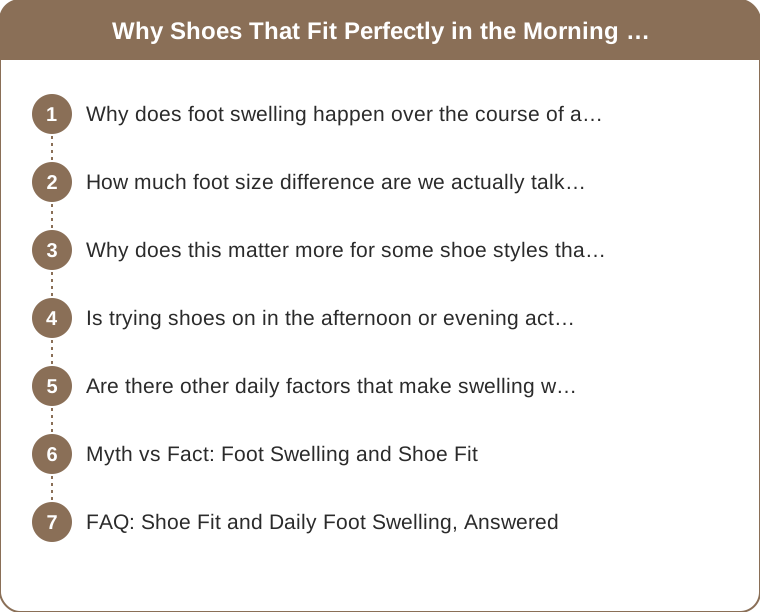
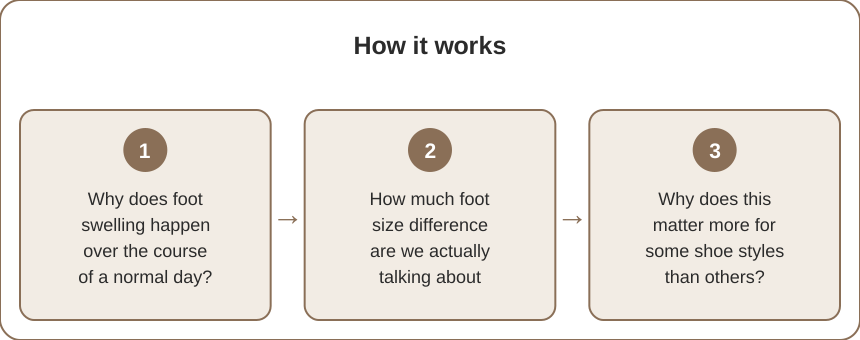
Why does foot swelling happen over the course of a normal day?
Gravity gradually pulls fluid downward toward your feet over hours of standing and walking, combined with mild inflammation from repeated impact and movement, which together cause measurable — if often subtle — swelling that typically peaks in the late afternoon and evening. This is a completely normal physiological pattern, not specific to any particular health condition, though certain factors (heat, long periods of standing, salt intake) can make it more pronounced on a given day.
How much foot size difference are we actually talking about across a day?
Studies on foot volume have found swelling can add roughly half a shoe size or more in perceived tightness by evening compared to morning measurements, which is enough to meaningfully change how a snugly-fitted morning shoe feels by the end of the day, particularly around the toe box and across the width of the forefoot.
Why does this matter more for some shoe styles than others?
Shoes with a narrow or pointed toe box show this effect much more noticeably than shoes with a rounder, roomier toe box, since there’s less spare volume to accommodate the natural swelling. Structured, non-stretch materials (rigid leather, for instance) also show the effect more than flexible, slightly stretch-accommodating materials.

Is trying shoes on in the afternoon or evening actually a reliable fix?
Yes — this is a commonly recommended practical strategy: shopping for shoes later in the day, when feet are closer to their largest natural size, gives a more realistic sense of all-day comfort than a morning fitting does. This is particularly worth doing for shoes intended for long wear (work shoes, shoes for a full day of travel or events).
Are there other daily factors that make swelling worse beyond just time of day?
Heat, long periods of standing without movement, high salt intake, and long flights or car rides can all increase swelling beyond the typical daily pattern. This is part of why shoes that fit fine on an ordinary day can feel especially tight after a long travel day or a very hot day specifically.
Myth vs Fact: Foot Swelling and Shoe Fit
Myth: A shoe feeling tighter by evening means it doesn’t actually fit. Fact: normal daily foot swelling can make even a correctly sized shoe feel tighter later in the day.
Myth: This only affects people with a specific health condition. Fact: mild daily foot swelling is a normal physiological pattern for most people, not a specific medical issue on its own.
Myth: Buying shoes a full size up solves the problem. Fact: this often creates morning looseness in exchange for evening comfort — a roomier toe box design, not simply a larger size, is generally the better fix.
FAQ: Shoe Fit and Daily Foot Swelling, Answered
Should I always shop for shoes in the afternoon or evening from now on?
For shoes meant for long or all-day wear, yes, this is a reliable practical habit; for occasional-wear shoes worn briefly, morning fitting is less critical.
Is significant, persistent foot swelling ever a sign of something more serious?
Occasional daily swelling that resolves overnight is normal, but persistent, one-sided, or significantly increasing swelling is worth mentioning to a doctor rather than assuming it’s purely shoe-fit related.
Do compression socks help reduce this kind of everyday swelling?
For some people, especially with long periods of standing or travel, mild compression can help reduce swelling and associated shoe discomfort, though it’s worth checking with a doctor before regular use if you have any underlying circulation concerns.
This is general information, not medical advice.
TL;DR:
- Feet naturally swell over the course of a day due to gravity and normal movement-related inflammation
- The effect typically peaks in the evening and can add roughly half a shoe size in perceived tightness
- Narrow toe boxes and rigid materials show this effect more than roomier, more flexible designs
- Shopping for all-day shoes in the afternoon or evening gives a more realistic fit test
A shoe feeling tighter by evening usually isn’t a fit failure — it’s a normal daily pattern worth designing around rather than fighting.
Keep Reading
This article is for general styling and informational purposes only. Trends, sizing, availability and pricing may vary by brand and season.