Why Toe Shape Changes How Long Your Legs Look More Than Heel Height Does
Quick Answer: Toe shape lengthens the leg line about as much as heel height does — and often more. A pointed toe carries the visual line forward past where your toes actually end; a round or square toe stops it dead. A flat pointed shoe can read longer than a rounded shoe with three inches of heel.
Everyone shops for leg-lengthening shoes the same way: they look at the heel.
It’s the obvious number. It’s printed on the box.
But stand two people side by side — one in pointed flats, one in round-toe heels — and the effect goes the way most people don’t predict. The heel isn’t doing as much of the work as its reputation suggests.
Why does everyone credit heel height?
Because the mechanism is visible and literal. Add three inches of heel and you are three inches taller — the leg physically extends, and you can see the change happen in the mirror.
It’s also the only variable with a number attached. “Three-inch heel” is easy to compare, easy to filter for online, easy to shop. “Almond toe versus round toe” isn’t a measurement, so it doesn’t make it onto the spec list, and things that aren’t measured tend to get ignored.
That’s the whole reason heel height dominates the conversation. It’s the easier variable to talk about, not the more powerful one.
How does toe shape lengthen the leg line?
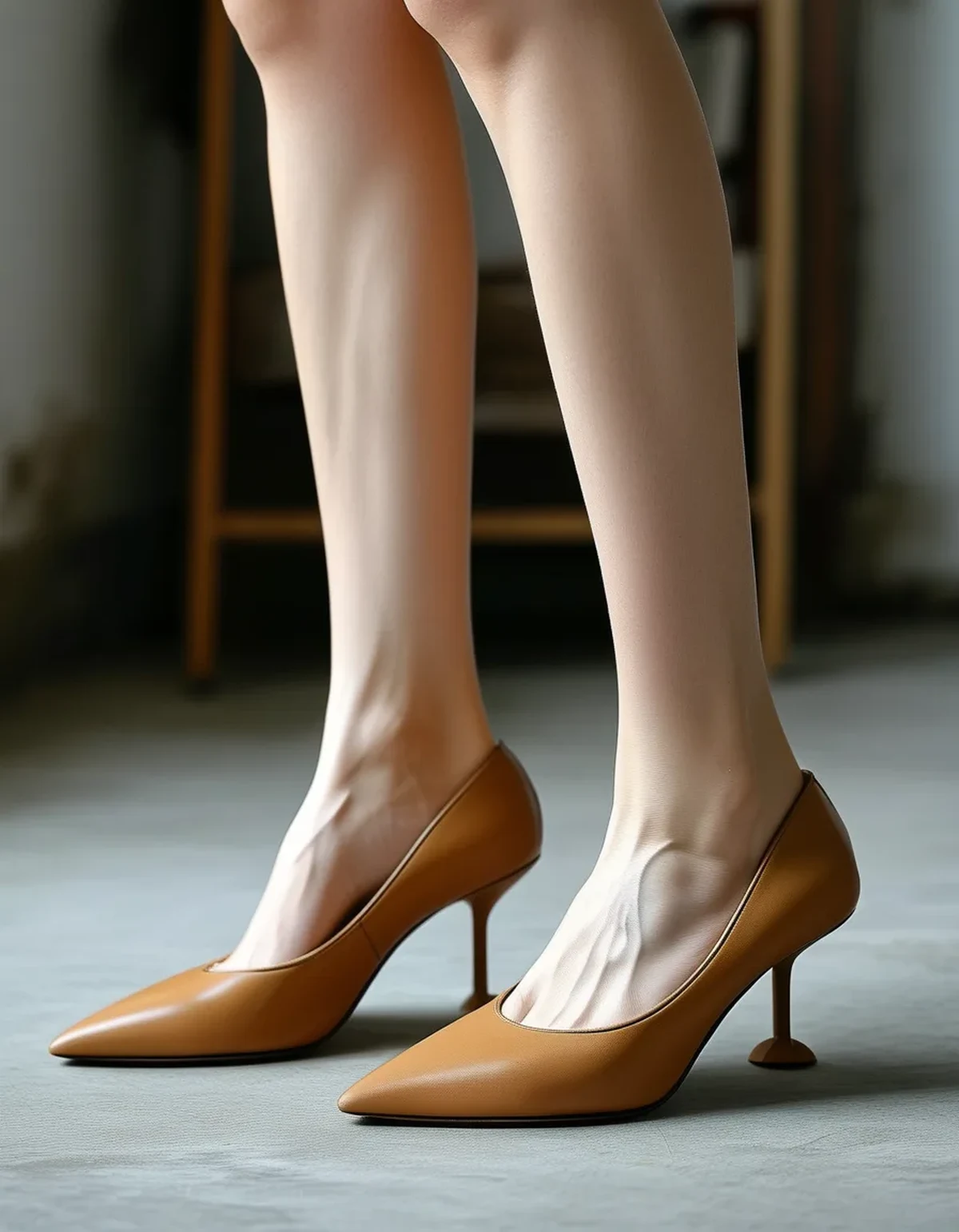
By extending the visual line past the end of your actual foot.
A pointed toe adds an elongated taper beyond where your toes stop. The eye reads the leg-plus-shoe as one continuous line, and that line simply runs further. It’s the same principle as a V-neck on a torso — the shape directs the eye along an axis and the axis reads longer.
A round or square toe does the opposite. It terminates the line abruptly, with a blunt horizontal edge across the front of the foot. That horizontal cut acts as a visual full stop, and it can make a leg in a genuinely high heel read shorter than a leg in a pointed flat.
Two supporting effects worth knowing: matching the shoe to your skin tone or hosiery removes the break between leg and foot entirely, and a low-cut vamp — the shoe’s opening sitting below the toe cleavage rather than high across the instep — exposes more foot and lengthens the line again.

Myth vs Fact
Myth: Higher heels always make legs look longer. Fact: They add real height, but a blunt toe caps the visual payoff. A round-toe 3-inch heel and a pointed flat can land in the same place, and the flat is considerably easier to wear.
Myth: Pointed toes have to be uncomfortable. Fact: An almond toe gets most of the elongating effect with far more room across the toe box. The discomfort people associate with points comes from a narrow fit, not from the shape of the tip.
Myth: Only pointed toes lengthen. Fact: The ranking runs pointed → almond → tapered round → round → square. It’s a gradient, not a binary. Moving one step along it changes the effect.
Myth: Ankle straps are fine if the heel is high enough. Fact: A contrasting ankle strap cuts the line horizontally at the narrowest point of the leg, which works directly against everything the heel gained. This is the detail that undoes the most outfits.
How should you actually shop for a longer leg line?
Reorder your priorities. Toe shape first, then vamp height, then colour match, then heel.
- Start with a pointed or almond toe, even in a flat or a low block heel. This gets you most of the effect with none of the pain.
- Choose a low-cut vamp. More visible foot means a longer visible line.
- Match the shoe to your skin tone or your hosiery. Nude-for-you, or the same colour as your tights or trousers, erases the break.
- Avoid contrasting ankle straps and chunky ankle-cutting details when the leg line is the priority.
- Then consider heel height — and think of it as an amplifier of a good shape rather than a substitute for one.
Practical note: a pointed toe usually needs a half size more length than a round one, because the taper starts before your toes end. Try both sizes rather than assuming.
FAQ
Does this work with trousers, or only bare legs?
Both, and arguably more with trousers. A pointed toe peeking out from a full-length hem continues the trouser line seamlessly, which is why the combination looks so much longer than a round toe under the same trousers.
What about boots?
Same rules, amplified. A pointed or almond boot in the same colour as your trousers or tights produces the longest line available in footwear, because there’s no break at the ankle at all.
Are square toes always shortening?
They’re the bluntest end of the gradient, so yes for pure leg-lengthening. They’re currently very stylish, though — if you want them, pair them with a colour match and avoid ankle straps to claw back some of the line.
TL;DR:
- Toe shape lengthens the leg as much as heel height, and gets almost no credit for it.
- Pointed toes extend the visual line past the foot; round and square toes cut it off.
- The gradient runs pointed → almond → tapered round → round → square.
- Low vamps and colour-matching to leg or trouser add more length; contrasting ankle straps remove it.
- Shop toe shape first, heel height last — and size up half a size in a point.
Heel height gets the credit; toe shape does comparable work. Choose the point or the almond first, match the colour, skip the ankle strap — and let the heel be a bonus rather than the whole plan.
Keep Reading
This article is for general styling and informational purposes only. Trends, sizing, availability and pricing may vary by brand and season.