The Sandal Portfolio: Building Summer's Footwear Bench
Quick Answer: Four sandals cover an entire summer: a flat leather everyday pair (the investment slot), a contoured-footbed comfort pair for high-mileage days, an evening sandal in a block heel or elegant flat, and a water-rated casual pair. The quality tell that matters most is stitched-through straps rather than glued — glue failure is what ends sandals in mid-August, always.
Summer’s shoe disasters are remarkably consistent. The blister walk on day two of a holiday. The strap that lets go outside a restaurant. The flip-flop that turned out to be very wrong for the dinner.
None of those are bad luck. They’re portfolio gaps — one pair being asked to do a job it was never built for.
Four slots fixes it.
What Are the Four Sandals You Actually Need?
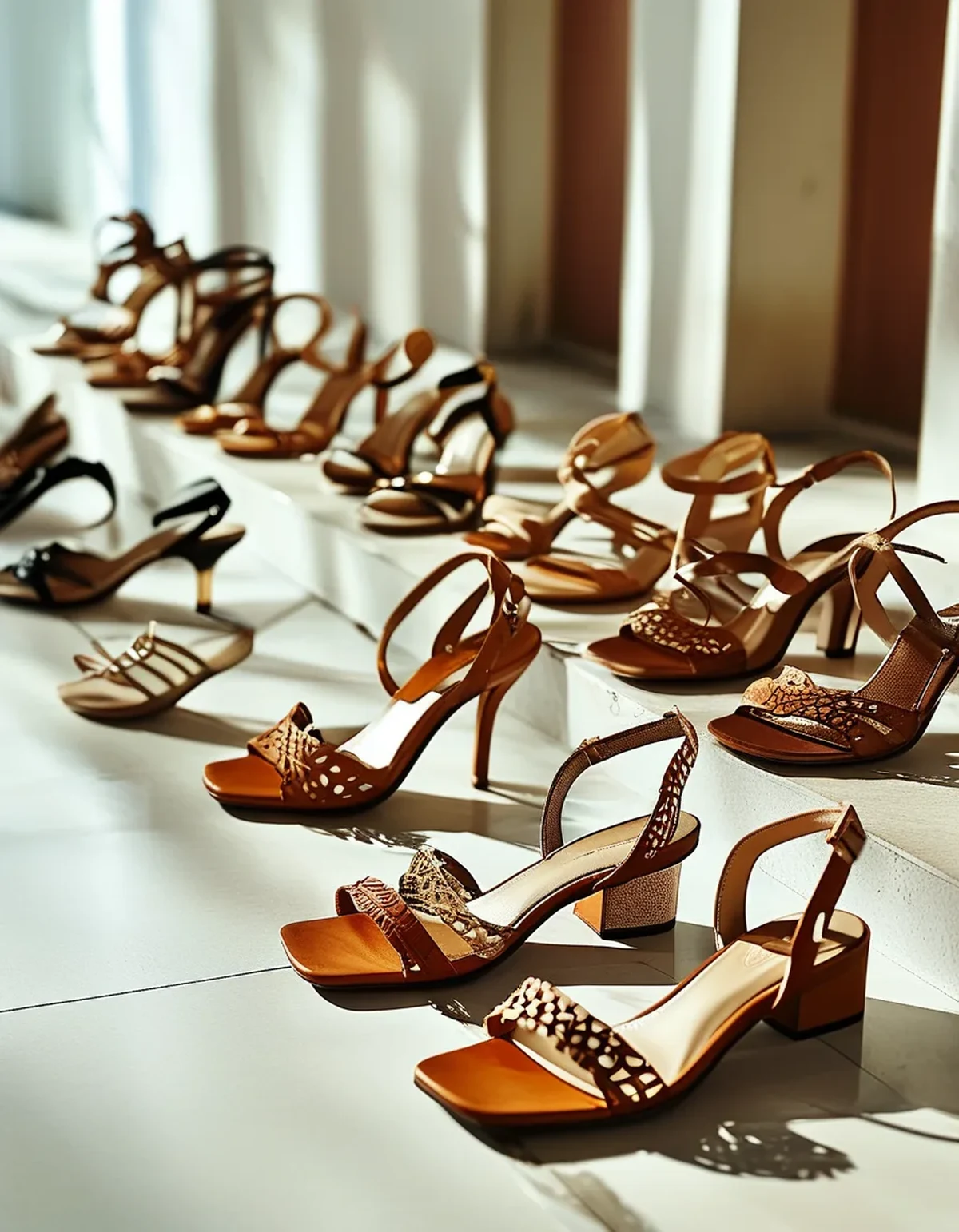
1. The flat leather everyday. The walk-everywhere workhorse and the portfolio’s investment slot — a simple leather slide or a two-strap flat in a neutral tone. It goes with roughly everything you own between June and September, so it’s the one worth spending real money on and the one that most rewards good construction.
2. The sporty-comfort tier. A contoured-footbed walker for the big-mileage days: sightseeing, festivals, a full day on your feet in a city. This is the pair that has visibly improved most in the last few years — the modern versions look nothing like the ones your dad wore, and the arch support is the entire point.
3. The evening sandal. A block heel or an elegant flat with a finer strap, for the season’s dinners, weddings, and anything with a dress code. Block over stiletto unless you know the venue’s flooring intimately.
4. The water-rated casual. Pool, beach, boardwalk, hotel bathroom. The one that shrugs at wet and dries fast.
Note where the flip-flop lands: it covers slot four and only slot four. Nearly every summer footwear complaint traces back to a flip-flop being asked to do slot one’s job.
How Do You Judge Whether a Sandal Is Walkable?
Before you commit to wearing it for a day, do the honest mileage math.
The footbed test. Press your thumb into the footbed. Is there cushion and contour, or is it a flat leather slab over a hard sole? A beautiful sandal with a zero-support footbed is a two-hour shoe — that’s not a flaw, it’s a specification, and knowing the number prevents the blister ambush at hour four.
Rate each pair honestly: 2 hours, half a day, or all day. Then pack accordingly.
The strap-position blister map. The predictable break-in zones are the between-toe post, the heel strap, and anywhere a strap crosses the top of the foot at an angle. Check where the edges sit against your skin before buying, and look for finished or padded edges at those points.
The new-sandal short-trip protocol. The first wear of a new pair is an errand — thirty minutes, close to home, with a plaster in your bag. Never a day trip and never the first day of a holiday. This rule has saved more vacations than any packing list.

What Nobody Tells You About Sandal Construction
Three tells, and the first one is the whole game.
Strap attachment: stitched beats glued. Look at where the strap meets the sole. If you can see stitching through it, that strap is going to hold. If it disappears cleanly into the sole with no visible fastening, it’s glued — and the mid-summer strap failure is always glue letting go, usually accelerated by heat and sweat. This single check is worth more than any brand name.
Sole material. Rubber-injected or stitched leather soles wear evenly and can often be resoled. Hollow moulded plastic soles wear through by August, can’t be repaired, and are the reason cheap sandals feel fine in June and horrible in September. Flip the pair and look.
Lining and edge finishing. At any price point above the very bottom, the edges of leather straps should be finished — burnished, painted, or turned. Raw, unfinished edges predict the dye-transfer ankle stripe, where the strap leaves a mark on your foot the first time it gets damp. If the edges look cut rather than finished, expect it.
Bonus tell: adjustable straps. A buckle or a hook-and-loop closure means the pair adapts as your feet swell in heat, which they will, by up to half a size on a hot afternoon.
How Do You Care for Sandals Through a Season?
Summer feet are honest, and the footbed keeps the record.
Rotate pairs. Alternating days lets the footbed dry fully, which prevents both odor and the darkened footprint that permanently marks light leather.
Wipe the footbed weekly. A damp cloth with a drop of mild soap, then dry fully out of direct sun. Ten seconds a pair. For suede or nubuck footbeds, use a suede brush dry instead.
Never leave leather sandals in a hot car or in direct sun. Heat dries leather out and can unglue soles — which is exactly the failure you’re trying to avoid.
End-of-season triage. In September: resole the ones worth resoling, retire anything worn through, clean everything before it goes away, and store them somewhere dry rather than in a sealed plastic box. A portfolio amortizes over multiple summers, and the care is what makes that possible.
Frequently Asked Questions
How do you break in new sandals without blisters?
Wear them for short indoor stretches first, use the errand protocol for the first outdoor wear, and pre-emptively tape the known friction points — the toe post and the heel strap — before you feel anything. Leather softens with wear; synthetic straps largely don’t, so if a synthetic pair rubs on day one, it will rub on day thirty.
Are sandals bad for your feet?
Flat, unsupportive sandals worn for long distances can aggravate plantar fasciitis and arch pain, and thong styles make you grip with your toes to hold them on, which fatigues the foot. Sandals with contoured footbeds and secure straps are a completely different proposition and are fine for daily wear. If you have diabetes, neuropathy, or persistent foot pain, talk to a podiatrist before spending a summer in open shoes.
Can you wear sandals with socks?
It’s now a mainstream styling choice rather than a punchline, and it works best with a chunky or sporty sandal and a deliberate sock — ribbed, in a color that’s clearly intentional. With a delicate evening sandal it still reads as an accident. As a practical matter it also prevents the between-toe blister entirely, which is worth something.
TL;DR:
- Four slots: flat leather everyday, contoured comfort walker, evening block heel, water-rated casual.
- The flip-flop covers slot four only — most summer shoe misery comes from asking it to do more.
- Rate every pair honestly by hours: 2 hours, half day, or all day.
- Stitched straps beat glued ones; glue failure is what ends sandals mid-season.
- Unfinished strap edges predict dye transfer onto your skin.
- First wear is a thirty-minute errand, never the first day of a holiday.
Keep Reading
This article is for general styling and informational purposes only. Trends, sizing, availability and pricing may vary by brand and season.