When to Put Away Sandals and What Replaces Them
Quick Answer: Sandals stop working when the ground is wet more often than it is dry, not at a specific temperature. In practice that is mid-September in most temperate climates. The three shoes that bridge the gap are the loafer, the mesh or canvas trainer, and the ankle boot — all closed, all wearable without socks in the warm hours, all fine on a damp pavement.
The forecast says twenty-two and the pavement is wet from a shower two hours ago. The sandals go on anyway and are wrong within a block.
The switch is not really about warmth. It is about the ground.
Here is the actual trigger and what fills the gap once it happens.
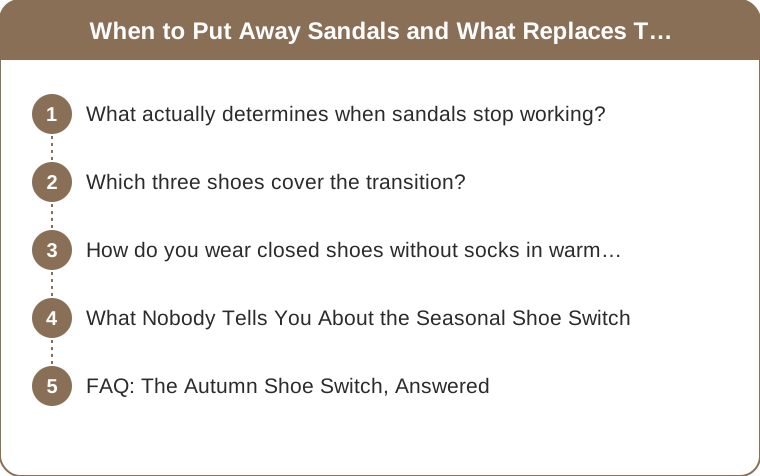
What actually determines when sandals stop working?
Wet ground, and it arrives ahead of cold air.
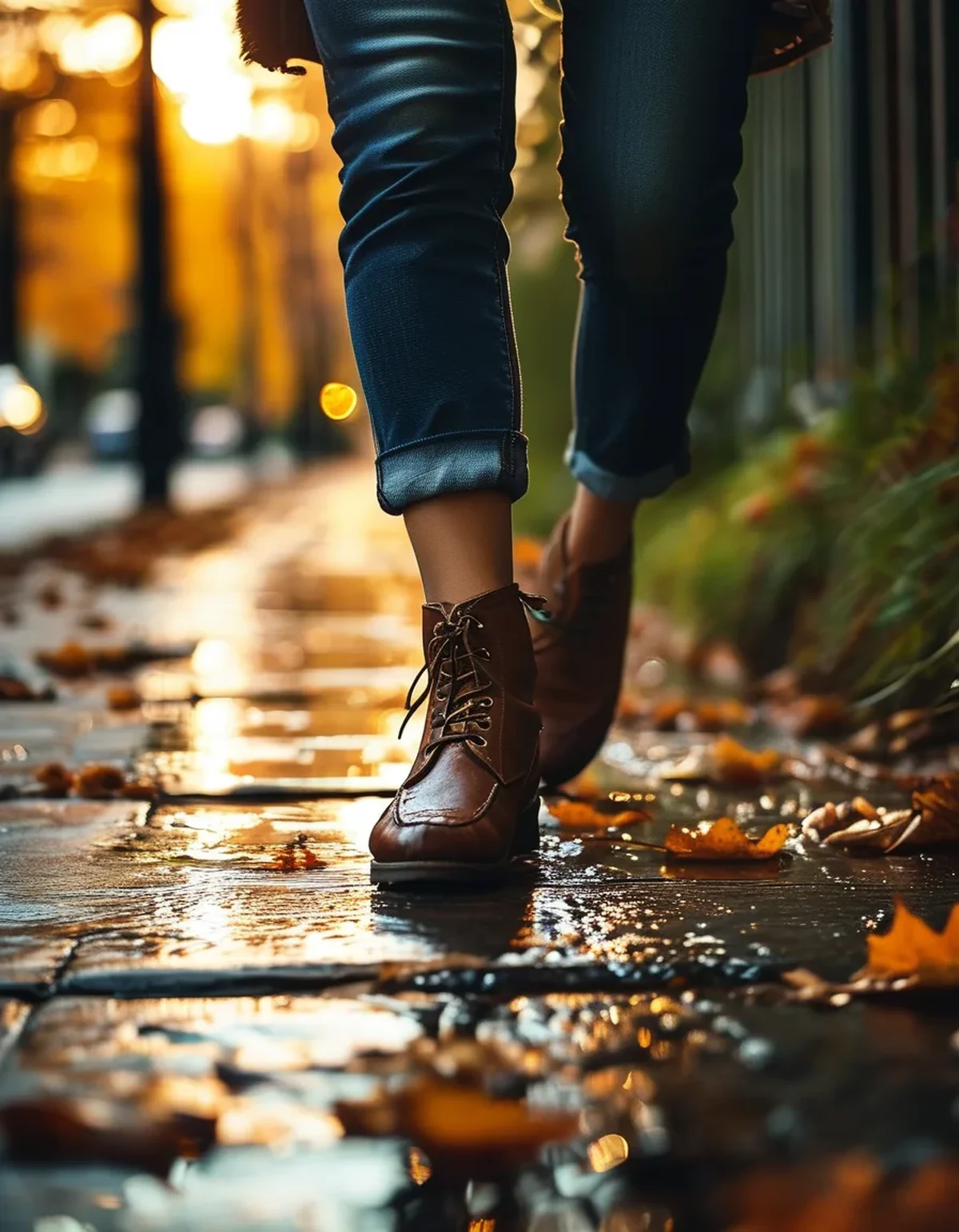
An open shoe on a damp pavement is unpleasant at any temperature. The foot gets wet, the sole picks up grit, and the shoe looks dirty within minutes.
Autumn rain behaves differently to summer rain. It stops, but the ground stays wet for hours because the sun is lower and the air is more humid. A dry afternoon still means a wet pavement.
Mid-September is the usual crossover in most temperate climates — the point where the ground is wet more mornings than not.
Temperature matters second. Bare feet are comfortable well into the mid-teens in dry conditions. The same temperature with wet ground is not.
The evening test is useful: if the shoe will be worn after eight, when the ground has cooled and dew has started, it should be closed.
Which three shoes cover the transition?
All closed, all wearable in the warm hours, all fine when it is damp.
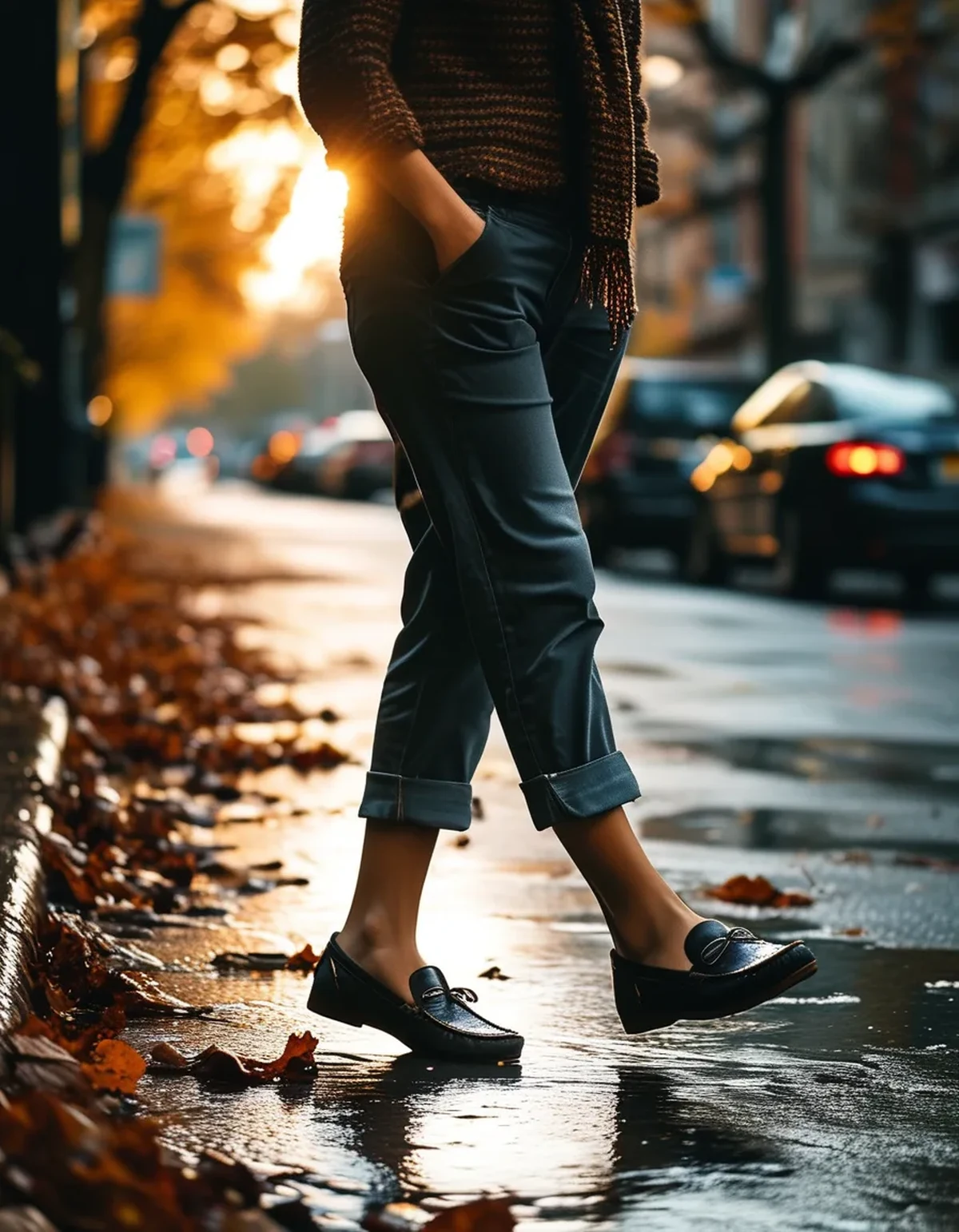
The loafer. Wearable barefoot or with a no-show sock, smart enough for work, and correct with cropped trousers, a midi or jeans. The single most useful September shoe.
The mesh or canvas trainer. Handles the warm afternoons that are still very much summer, without the wet-foot problem. Leather trainers get hot; mesh does not.
The ankle boot. The end of the transition rather than the middle. Correct from about the third week of September, and it is what makes bare legs work into October.
The ballet flat sits alongside the loafer if the wardrobe leans feminine, with the same advantages and slightly less weather tolerance.
Two of these three covers the whole period. The loafer plus one other is the realistic answer.
How do you wear closed shoes without socks in warm weather?
With the right sock, which is not no sock at all.
A proper no-show sock with a heel grip is the whole answer. Going genuinely barefoot in a leather shoe destroys the lining within a season and creates a smell problem that is very hard to reverse.
Buy the invisible sock a size correctly. Most slipping is a sizing issue, and a sock that slides under the arch is worse than none.
Leather and suede need the sock more than canvas does, because they absorb rather than breathe.
A cedar shoe tree overnight does more for the longevity of a barefoot-worn shoe than anything else, and it takes ten seconds.
Rotate rather than repeat. A shoe worn barefoot two days running does not dry out in between, which is where nearly all damage originates.
What Nobody Tells You About the Seasonal Shoe Switch
Sandals stored dirty come out of the box ruined. Salt, sun cream and sweat continue to work on leather all winter. Ten minutes of cleaning in September saves a pair.
The first day in closed shoes is the day of the blister, because feet spread over a summer of sandals. Autumn shoes genuinely fit differently in September than they did in April.
Suede goes on sale in early autumn and is the worst possible time to buy it, unless it will be protected before first wear.
Boot zips fail in storage, not in use. Check every zip before the season starts rather than on the morning it is needed.
The shoe people actually notice is the one that looks out of season. A summer sandal in October reads more strongly than any other outfit element, which is why the switch matters more than it should.
FAQ: The Autumn Shoe Switch, Answered
Can I wear sandals with socks in September?
It works when the sock is deliberate — a fine ribbed sock with a substantial sandal reads as a choice. A thin invisible sock showing at the edge does not. Commit or switch shoes.
When can I start wearing boots?
Around the third week of September, or whenever the evening temperature drops below fourteen. Boots in early September look like impatience; boots in October look correct.
How should I store sandals over winter?
Clean them, let them dry fully away from direct heat, and store them somewhere with airflow rather than sealed in plastic. Sealed storage is what causes the mould that ruins a pair over a winter.
TL;DR:
- Wet ground, not cold air, is what ends sandal season — usually mid-September.
- The loafer, the mesh trainer and the ankle boot cover the whole transition.
- Use a proper no-show sock and rotate shoes; barefoot wear in leather is what destroys them.
- Clean sandals before storing, and check boot zips before you need them.
The switch is one of the few wardrobe changes where the timing is genuinely visible to other people, which makes it worth getting a week early rather than a month late.
Keep Reading
This article is for general styling and informational purposes only. Trends, sizing, availability and pricing may vary by brand and season.