When to Stop Wearing Sandals (It Is Not a Date on the Calendar)
Quick Answer: Switch when your morning temperature sits below about sixteen degrees, not on a date. The gap between sandals and boots is filled by three shoes: loafers, ballet flats, and mesh or canvas trainers - all closed, all unlined, all comfortable bare-legged. Boots become right when you start wearing socks or tights by choice, which for most climates is mid-October rather than early September. The signal that reads most current in the meantime is closed shoes with bare legs.
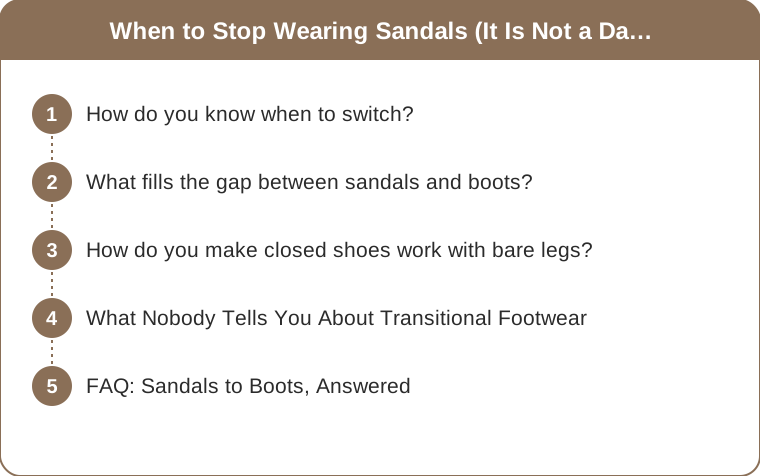
How do you know when to switch?
Use the morning temperature, not the daytime high. If your 8am reading is under sixteen degrees, sandals will be uncomfortable for the first two hours of the day.
Watch for the sock instinct. The first morning you genuinely want socks is the real signal, and it is a better one than any date.
Ground temperature lags the air by weeks. Pavement and tile stay cool well after the air warms, which is why open shoes feel wrong before the forecast suggests they should.
Rain frequency matters as much as temperature. Wet feet in open shoes is what actually ends sandal season in most climates.
Indoor environments are part of the decision. Air-conditioned offices make open shoes uncomfortable even in genuinely warm weather.
And bare legs with closed shoes is the answer for the whole in-between period - it reads as current and solves the temperature problem at the same time.
What fills the gap between sandals and boots?
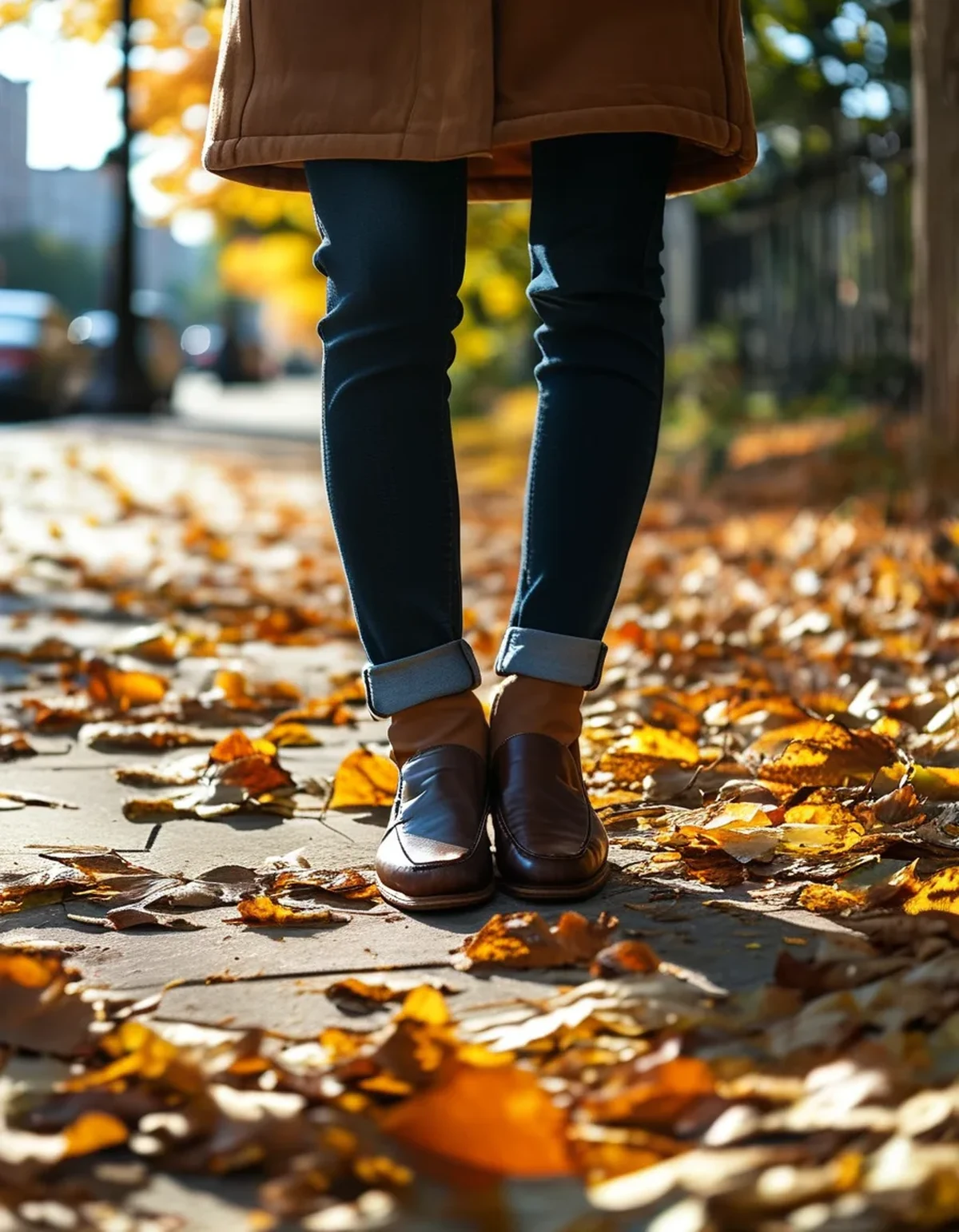
Loafers, first and foremost. Closed, unlined, comfortable with bare feet or a no-show sock, and the single most useful transitional shoe there is.
Ballet flats and mary janes. Light, closed, and they work with dresses in a way that a trainer or a boot does not.
Mesh or canvas trainers. Breathable but closed, which is exactly the specification this window requires.
Mules with a closed toe. They give the ease of a sandal with a covered front, which handles cool mornings without overheating.
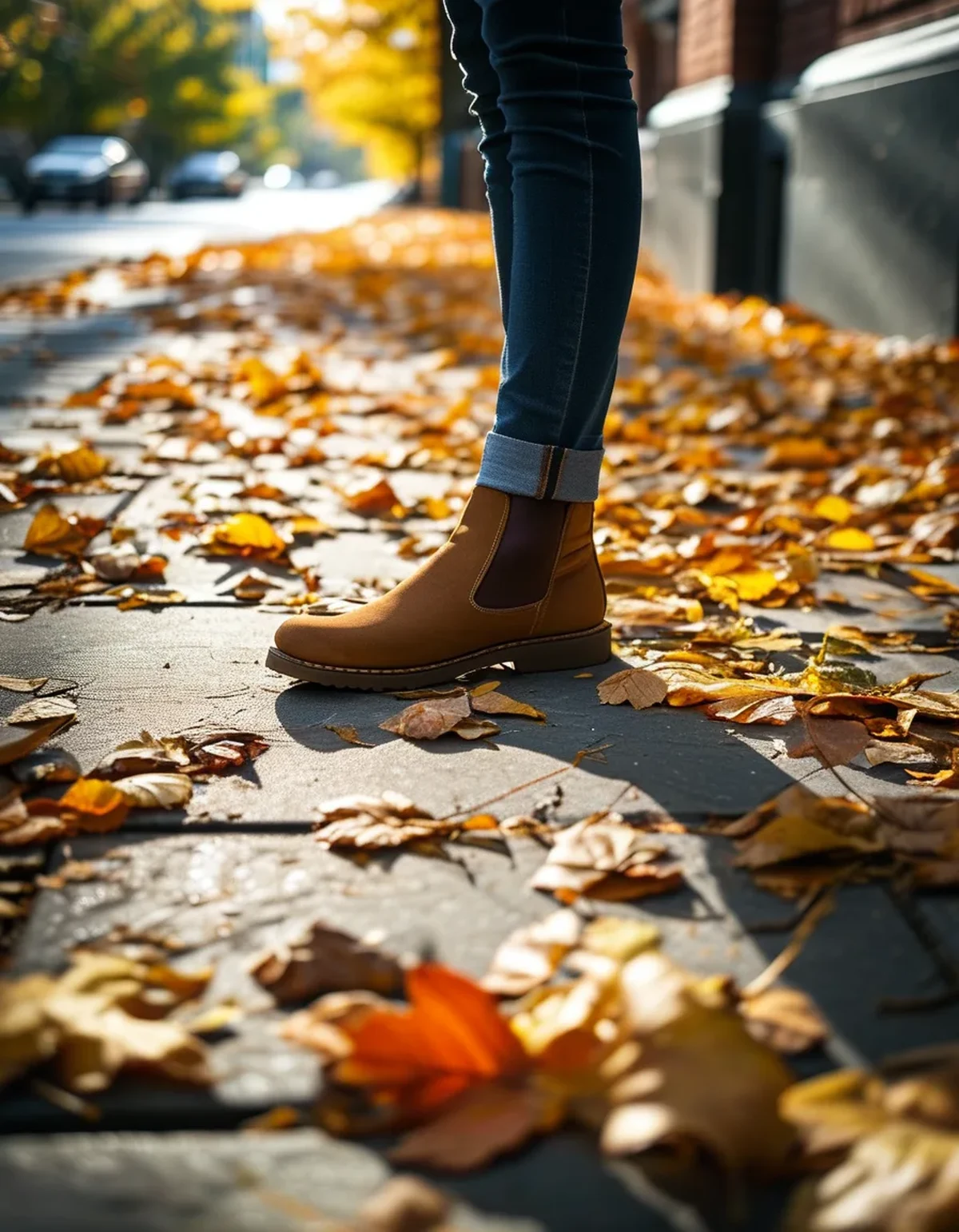
Unlined ankle boots, near the end of the window. Leather without a shearling or thermal lining works from about fourteen degrees.
And a low block heel in suede reads seasonal from mid-August onward while remaining comfortable in genuinely warm weather.
Notice what all of them share: closed but not insulated, which is the entire specification for this six-week period.
How do you make closed shoes work with bare legs?
Use a proper no-show sock. A heel-gripped no-show stops the blisters that make people abandon loafers in the first week.
Expect to break shoes in during this window. Bare feet in unworn leather is how the transition goes wrong, and two evenings at home prevents it.
Use a leather balm on the inside heel. It softens the exact edge that causes rubbing, and it is the cheapest possible intervention.
Choose leather or canvas over synthetic uppers. Feet still perspire at twenty degrees, and synthetic linings hold it.
Watch the hem-to-shoe relationship. Cropped trousers with loafers works; full-length trousers with a bare ankle showing does not.
And a tonal shoe extends the leg line. A shoe close to your skin tone or to your hem colour keeps the vertical line running, which matters more with bare legs than with tights.
What Nobody Tells You About Transitional Footwear
Feet swell in the transition more than at any other time. Warm days and cool mornings produce genuine variation in fit, which is why a boot can fit at nine and pinch at four.
Boots bought in summer often fit wrong in winter. A thicker sock adds a half size, and it is the most common boot-buying error there is.
Sandal season ends on rain, not temperature, for most people. Which is why a waterproof closed shoe ends up being the actual purchase.
The suede-to-leather switch reads seasonal on its own. Suede is a texture signal that shifts an outfit before the temperature does.
Your summer shoes need attention before storage, not after. Cleaning and conditioning before they go away is the difference between three seasons and one.
And this six-week window is where most wardrobes are thinnest. People own sandals and boots and almost nothing between them, which is a genuinely fixable gap.
The single best purchase to fix it is a loafer - closed, unlined, and useful for four months a year across both shoulder seasons.
FAQ: Sandals to Boots, Answered
When should I stop wearing sandals?
When your morning temperature sits below about sixteen degrees, or the first morning you genuinely want socks - not on a date.
What shoes work between sandals and boots?
Loafers, ballet flats, mary janes, closed-toe mules, and mesh or canvas trainers. Closed but not insulated is the specification.
When is it time for boots?
When you are wearing socks or tights by choice, which in most climates is mid-October rather than early September.
Can I wear closed shoes with bare legs?
Yes - it is the most current-reading transitional combination there is. Use a heel-gripped no-show sock to prevent rubbing.
Why do my boots fit differently in winter?
Thicker socks add roughly half a size. Boots bought in summer with bare feet frequently pinch once the sock changes.
What is the single best transitional shoe to buy?
A loafer. Closed, unlined, works bare-legged or with a sock, and useful across both shoulder seasons - roughly four months a year.
TL;DR:
- Switch on morning temperature (under about 16 degrees), not on a date.
- The first morning you want socks is the real signal.
- The gap shoes: loafers, ballet flats, mary janes, closed-toe mules, mesh trainers.
- Closed but not insulated is the whole specification for this window.
- Bare legs with closed shoes is the most current transitional combination.
- Use a heel-gripped no-show sock and break shoes in at home first.
- Boots are right when you want socks or tights - usually mid-October.
- Clean and condition summer shoes before storing, not after.
Keep Reading
This article is for general styling and informational purposes only. Trends, sizing, availability and pricing may vary by brand and season.