Why Brand-New Shoes Hurt Even When They're Technically the Right Size
Quick Answer: Correct length doesn’t guarantee correct volume — most new-shoe pain comes from a mismatch in width, arch position, or material stiffness, not the size number itself. Checking fit at the shoe’s widest and stiffest points, not just heel-to-toe length, predicts real comfort far better.
The size on the box matched your foot measurement exactly. And yet by the second hour of wear, there’s a hot spot, a pinch, a rub that has nothing to do with length. Length was never the whole story.

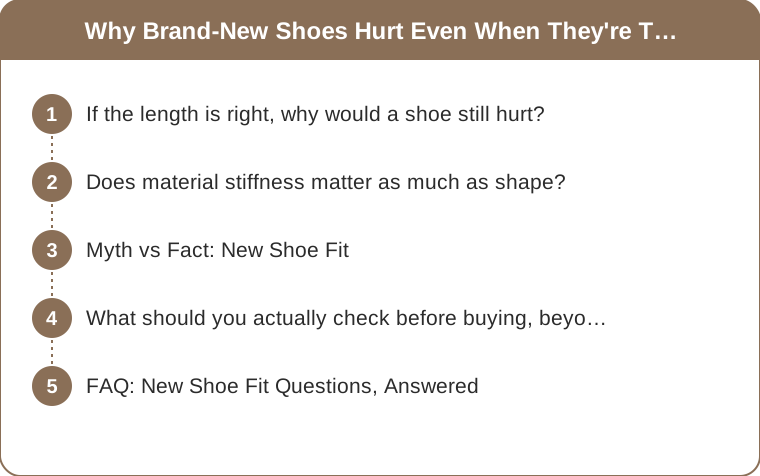
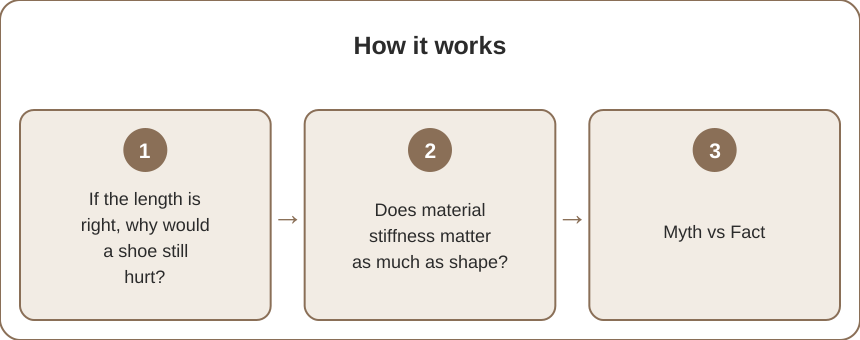
If the length is right, why would a shoe still hurt?
Shoe size charts measure length primarily, but comfort depends just as much on width, volume, and where the shoe flexes relative to where your foot actually bends. A correctly-lengthed shoe that’s narrow through the midfoot, or that flexes an inch off from your natural toe-bend point, creates friction regardless of the size tag matching.
This is why the same labeled size can feel completely different across brands and even across styles within one brand — the length number is only one input among several that determine actual fit.
Does material stiffness matter as much as shape?
Yes, often more for the first few wears specifically. A structurally stiff material (many leathers, structured synthetics) needs to physically break in and mold to your foot’s shape — pain in the first few wears is frequently the material adjusting, not a sizing mismatch at all.
Softer, more flexible materials from the first wear tend to cause less initial pain but may offer less structure long-term, which is its own tradeoff.

Myth vs Fact: New Shoe Fit
Myth: If shoes fit at the store, they’ll fit the same after a full day of wear. Fact: Feet swell throughout the day, and stiff new materials haven’t stretched yet — a fit that felt fine standing in a store often changes measurably by hour six of real wear.
Myth: Pain means the shoes are the wrong size. Fact: Pain often means the wrong width, wrong arch position, or un-broken-in material — swapping to a genuinely different size can make width or volume problems worse, not better.
Myth: All shoes need the same break-in period. Fact: Break-in time varies enormously by material — soft knit sneakers may need none, while structured leather can reasonably take several wears to fully mold.
What should you actually check before buying, beyond length?
Try shoes on at the end of the day, when feet are naturally at their largest, rather than first thing in the morning. Walk on a hard floor for a few minutes in-store rather than just standing — a stiff spot or pinch usually shows up within the first minute of actual walking, not standing still.
Check specifically where the shoe bends versus where your foot naturally bends at the ball of the foot — a mismatch there causes far more discomfort over a day than a slightly generous length does.
FAQ: New Shoe Fit Questions, Answered
How long should shoe break-in reasonably take?
For structured leather, 3-5 wears of a few hours each is typical; for soft synthetic or knit shoes, often none at all — persistent pain well past that point usually signals a genuine fit issue, not just break-in.
Should I size up if a correctly-lengthed shoe still feels tight?
Check width availability first — many brands offer wide or narrow options in the same length, which solves a volume problem more precisely than simply sizing up in length.
Is it normal for new shoes to need a bandage or blister protection for the first few wears?
Some friction during break-in is common with stiffer materials, but a sharp, specific hot spot in the same location every wear usually indicates a shape mismatch worth addressing rather than pushing through.
TL;DR:
- Correct length doesn’t guarantee correct width, volume, or flex-point match
- Stiff materials need genuine break-in time; pain there is often material, not sizing
- Try shoes on at day’s end and walk on a hard floor before buying, not just stand
- A persistent, specific hot spot signals a shape mismatch, not something to push through
The size number was right — it just wasn’t the whole fit story.
Keep Reading
This article is for general styling and informational purposes only. Trends, sizing, availability and pricing may vary by brand and season.