Why Suede Looks Flat by Autumn, and How to Bring It Back
Quick Answer: Suede looks flat because the nap — the short raised fibres that give suede its depth — has been crushed flat by pressure, moisture or oil, so light reflects off it in one direction instead of scattering. In most cases the fibres are intact and simply lying down. A stiff-bristled suede brush, worked in one direction while the shoe is completely dry, lifts them back up and restores the colour in minutes. Shiny patches at the toe and heel need the brush plus a suede eraser first.
You take last year’s boots out of the box in late September and they look tired in a way you cannot quite name. Not dirty. Not scuffed. Just flat, slightly darker in places, shiny where they should be matte. The instinct is to assume suede simply does not last. It does — what you are looking at is almost entirely reversible.
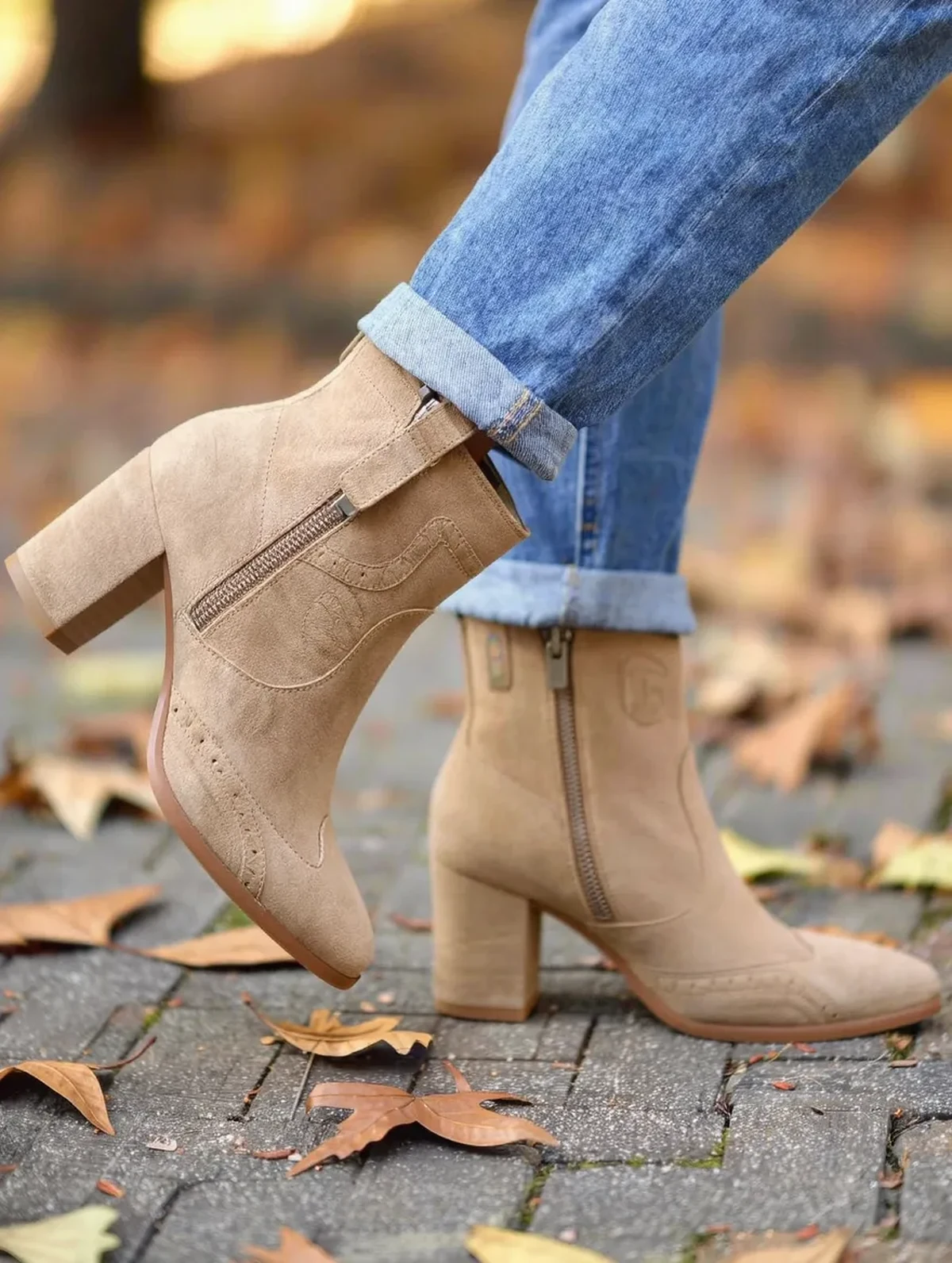
What is actually happening when suede goes flat?
Suede is leather sanded on the inside surface to raise a nap of tiny fibres. That nap is why suede has depth: the fibres stand up, catch light from different angles, and scatter it. A rich suede is one whose fibres are standing.
Three things push them down.
Pressure. Anything resting on the shoe in storage, the crease of repeated flexing at the toe box, the rub of a trouser hem. Fibres in those spots get compacted into a mat and stop standing up.
Moisture. Water makes the fibres swell, clump together and then dry in a matted position. This is why a rain-spotted suede shoe is patchy rather than evenly darker — the matting is localised.
Oil. The worst of the three, and the reason the toe and the sides near the ball of the foot go shiny first. Oil from skin, from pavement, from a hand steadying the boot while you pull it on, coats the fibres and glues them down. An oiled patch is the one type of flatness a brush alone will not fix.
So before you do anything, work out which one you are dealing with. Even flatness overall is pressure. Patchy dark marks are water. Shiny, slightly darker areas that feel smooth under a fingertip are oil.
How do you actually revive it, step by step?
First, make sure the shoe is bone dry. Brushing damp suede mats it further and can tear the nap. If they have been worn recently, give them a day.
Then brush with a real suede brush, in one direction. Brass or nylon bristles, firm pressure, all strokes going the same way — usually toe to ankle. Back-and-forth scrubbing tangles the fibres; one-directional strokes lift and align them. You will see the colour lighten and even out as you go. This alone fixes most flat suede and takes about three minutes a pair.
For shiny or oily patches, use a suede eraser first. It looks like a hard rubber block and works the same way — rub it firmly over the shiny area until you see crumbs lift, then brush. A clean pencil eraser works in an emergency. This is the step that rescues the shiny toe box everybody assumes is permanent.
For stubborn matting, use steam — carefully. Hold the shoe about twenty centimetres above a kettle or a steaming mug for a few seconds, just until the surface feels slightly humid, then brush immediately while the fibres are relaxed. Do not soak it, and do not do this to shoes with glued-on trims.
Finish by brushing the whole shoe again so the direction of the nap is uniform. Uneven nap direction is what makes a cleaned suede shoe look blotchy even when it is clean.

Myth vs Fact: Suede Care
Myth: Suede is ruined by rain. Fact: Suede is ruined by rain that dries without being brushed. Let it dry at room temperature, away from heat, then brush the nap back up and most water marking disappears. The permanent damage happens when people dry suede on a radiator, which stiffens the leather underneath.
Myth: You should waterproof suede with the same spray you use on leather. Fact: Use a spray made for suede and nubuck. Standard leather waterproofers contain waxes and oils that coat the nap — which is precisely the thing that makes suede go shiny. The right product is a fine, dry-finish protector, applied to a clean shoe, re-applied every few weeks in wet weather.
Myth: A shiny toe means the suede has worn through. Fact: Genuine wear-through shows as a smooth, thin patch where you can see the leather’s grain structure. A shiny toe on otherwise thick suede is compacted, oiled nap, and an eraser plus a brush usually restores it completely.
Myth: Cleaning suede at home is risky, so it should go to a specialist. Fact: Brushing is close to risk-free and is what a specialist does first anyway. Take suede to a professional for dye transfer, salt staining that has not lifted, or oil that has soaked through — not for ordinary dullness.
Myth: Cheap suede cannot be revived. Fact: Thin suede has a shorter nap and less to lift, so the result is less dramatic, but the technique is identical. What genuinely does not revive is suede-look synthetic, which has no fibres to raise.
How do you keep suede looking good through a whole season?
Brush after every few wears, not once a season. Thirty seconds with a brush when you take them off prevents the compaction that later requires steam and erasers. It is the same logic as brushing a wool coat.
Protect before the first wear, then again monthly. A suede protector spray makes water bead rather than soak, which turns a downpour from a staining event into a drying event. Do it outdoors, in light coats, and let it dry fully.
Stuff them and store them with air around them. Shoe trees or paper keep the toe box from creasing, and creases are where flatness starts. Do not store suede in a sealed plastic box — trapped humidity mats the nap across the whole shoe, which is exactly the flat, dull look that shows up in autumn.
Rotate. Suede worn on consecutive days never dries out fully between wears, and damp nap compacts under pressure every single step.
And keep a small brush by the door. The care that actually happens is the care that requires no decision. Most suede does not die of neglect in any dramatic sense; it just never gets the four minutes that would have kept it looking new.
FAQ: Suede Revival Questions, Answered
Can I use a wire brush from the hardware shop?
No. Suede brushes have deliberately soft brass or nylon bristles set in a specific density. A hardware wire brush tears the nap and leaves visible scoring that cannot be fixed. A proper suede brush costs very little and lasts years.
What about salt stains from winter pavements?
Mix equal parts white vinegar and water, dampen a cloth lightly — not soaking — wipe the stained area, let it dry completely, then brush. Salt draws moisture out of the leather, so treat it promptly rather than waiting for spring.
Does brushing wear the suede out over time?
Not at the pressure you can apply with a suede brush. You are lifting fibres, not abrading them. The thing that genuinely thins suede is repeated wet-and-dry cycling without protection, which is an argument for spraying rather than an argument against brushing.
TL;DR:
- Flat suede is almost always crushed nap, not worn-out leather, and the fibres are still there to lift.
- Brush dry suede in one direction with a proper suede brush — three minutes restores most of the depth and colour.
- Shiny patches are oil: use a suede eraser first, then brush; stubborn matting responds to a few seconds of steam.
- Protect with a suede-specific spray, store with air and shoe trees, and brush every few wears rather than once a season.
Suede has a reputation for being delicate that it does not really deserve. It is high-maintenance in the sense that it wants four minutes of attention, and low-maintenance in the sense that those four minutes undo an entire season of neglect. Brush them before you decide they are finished.
Keep Reading
This article is for general styling and informational purposes only. Trends, sizing, availability and pricing may vary by brand and season.