Why the Same Size Fits Differently in Literally Every Shoe
Quick Answer: Shoe sizes vary between brands because every shoe is built on a last — a foot-shaped mold — and no two brands use the same last. A size is a measurement of the last, not of your foot, so your reliable number is your foot length in centimeters plus your width and instep height, not a size. Measure at the end of the day, standing, both feet.
You own shoes in three different sizes and they all fit. This is not a mistake anyone made.
It is what happens when a number describes the container rather than the contents.

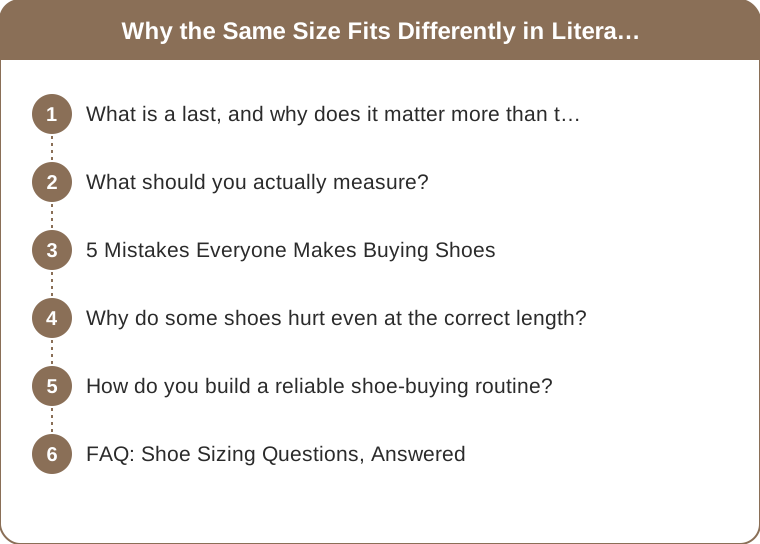
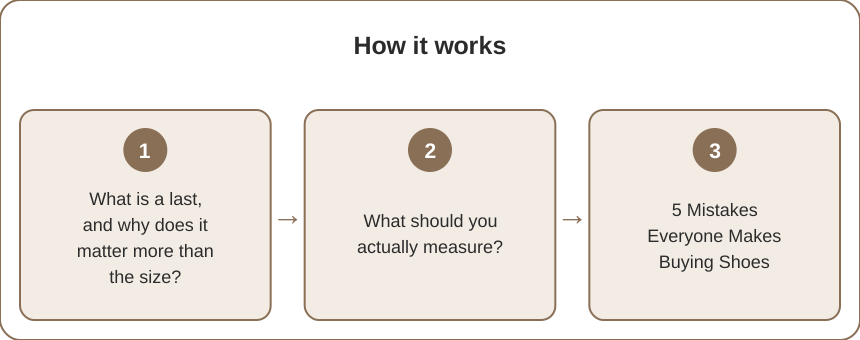
What is a last, and why does it matter more than the size?
A last is the three-dimensional mold a shoe is built around, and it is the single biggest variable in fit.
Every brand develops its own lasts, based on their target customer, their aesthetic, and often decades of tradition. Two shoes on different lasts in the same stated size can differ by a full centimeter in internal length.
The last also determines shape, not just length. Toe box volume, instep height, heel cup width, and arch position are all last decisions, and none of them appear on the box.
A pointed shoe is usually built longer than a round one in the same size, because the point extends past the toes. This is why your pointed flats are a size smaller than your sneakers and both are correct.
Heel height changes effective length too. Raising the heel slides the foot forward, so a 3-inch heel needs more length than a flat on the same last.
Which is why the useful question is never what size am I — it is which lasts suit my foot.
What should you actually measure?
Three numbers, once, and then you can shop from anywhere.
Foot length in centimeters, measured standing with weight on the foot, heel against a wall, at the end of the day. Feet lengthen under load and swell through the day, and a morning seated measurement is typically 5 to 8 millimeters short.
Foot width at the widest point, which is across the ball. This is the number that decides whether a shoe rubs, and it is the one almost nobody knows.
Instep height, roughly — whether the top of your foot is flat or high. A high instep is why some loafers and pumps press across the top no matter how long the shoe is.
Measure both feet. Most people have a difference of 3 to 6 millimeters, and you fit the larger foot and pad the other if needed.
Then compare your centimeter measurement to each brand’s own conversion chart, which many publish. That is dramatically more reliable than assuming a size carries across.
5 Mistakes Everyone Makes Buying Shoes
Shopping in the morning. Feet are at their smallest first thing and can gain half a size by evening. A shoe fitted at 9am is a shoe that hurts at 6pm, and this alone explains a large share of unworn shoes.
Trusting the size on a shoe you already own. The number in your current shoes reflects that brand’s last, not your foot. Measure the foot, not the shoe.
Assuming leather will stretch to fix a length problem. Leather stretches in width and across the instep. It does not stretch in length, so a short shoe stays short.
Trying shoes without the socks or tights you will wear. A wool sock, a sheer tight, and bare feet are three different fits, and the difference is easily half a size.
Walking only on carpet. Every shop is carpeted and every street is not. Find a hard surface — the difference in how a sole feels and whether the heel slips is immediate and it is what you will actually experience.

Why do some shoes hurt even at the correct length?
Because length was never the whole problem, and three other dimensions are doing the damage.
Width mismatch causes the classic side-of-the-foot rub. A shoe that is correct in length and narrow at the ball will rub at the little toe joint every time, and no break-in fixes a width that is genuinely too small.
Instep pressure produces a bruised feeling across the top of the foot, usually with loafers, pumps, and Mary Janes. This is a last shape issue and is not fixable.
Heel cup mismatch causes slipping, which then causes blisters at the back. A slipping heel with a correct-length shoe means the heel cup is too wide or too shallow — a heel grip helps, and a different last helps more.
Toe box height matters for anyone with a slight bunion or a taller second toe, and it is invisible until the shoe is on.
The useful diagnostic: note where it hurts and it tells you which dimension is wrong. Side means width, top means instep, back means heel cup, front means length.
How do you build a reliable shoe-buying routine?
Learn your lasts, not your size, and the whole problem shrinks.
Note which brands work. After a few pairs, patterns emerge — some brands run narrow, some have generous toe boxes, some sit high at the instep. That list is more useful than any size.
Note your centimeter measurement and check it yearly. Feet change with age, weight, and particularly after pregnancy — many people are half a size larger than they believe.
Buy late in the day, on a hard floor, in the socks you will wear. These three take no extra effort and remove most of the risk.
Give a new pair ten minutes indoors before committing. Most fit problems appear inside ten minutes, and until then the shoes are still returnable.
And accept that some lasts will never work for your foot regardless of how good the shoe is. That is not a fit failure; it is a shape mismatch, and walking away is the correct response.
FAQ: Shoe Sizing Questions, Answered
How much room should there be at the toe?
About a thumb’s width — roughly 1 to 1.5 centimeters — between your longest toe and the end, standing. Your longest toe is not always your big toe, which trips people up.
Do shoes really need breaking in?
Good shoes soften and mold slightly, mostly across the upper. They do not change size. If a shoe hurts in a specific spot on day one, it will hurt there in month six.
Why do my feet seem to have grown?
Most adults gain some length and width over time as the ligaments in the foot relax, and this accelerates after pregnancy or significant weight change. Remeasuring every year or two is worth the two minutes.
Is one foot being bigger a problem?
No, it is the norm. Fit the larger foot and use a thin insole or a heel grip in the other. Fitting the smaller foot guarantees discomfort on one side permanently.
TL;DR: Your size describes the shoe’s mold, not your foot.
- Every brand uses its own last. Same size, up to a centimeter of difference inside.
- Measure three things: length in centimeters, width at the ball, instep height. Standing, end of day, both feet.
- Pointed shoes run longer; heels need more length than flats on the same last.
- Leather stretches in width, never in length.
- Where it hurts tells you what is wrong — side is width, top is instep, back is heel cup.
- Learn which brands suit your foot. That list beats any number.
Measure your feet tonight, standing, in centimeters. It takes two minutes and it changes every shoe purchase after it.
Keep Reading
This article is for general styling and informational purposes only. Trends, sizing, availability and pricing may vary by brand and season.