Why Your Feet Get Cold in Leather Boots (It Is Rarely the Leather)
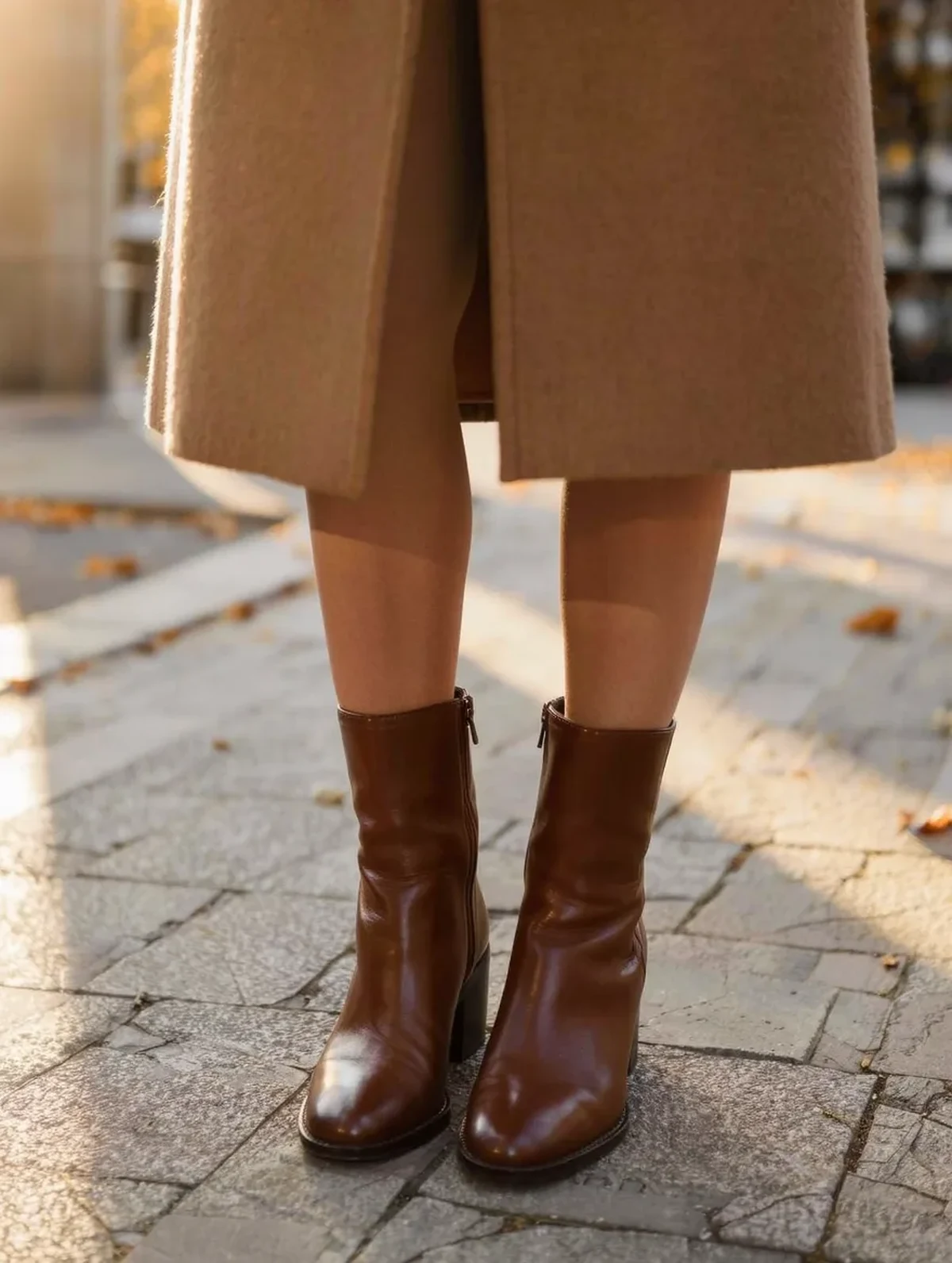
Quick Answer: Most heat leaves your foot downward, not sideways, so a thin leather or smooth rubber sole on a cold pavement chills your feet faster than any upper could. The second cause is a boot that fits too snugly — a compressed foot loses circulation and the trapped layer of warm air disappears. A slightly roomier fit, a thicker sole or insole, and a wool-blend sock fix the problem in most beautiful leather boots.
It is the first properly cold morning of October. You put on the good leather boots, the ones that look exactly right with the coat, and by the time you reach the station your toes feel like they belong to somebody else. The obvious conclusion is that leather is simply not warm. It is also mostly wrong, and the real culprit is sitting right under your foot.

Where does the heat actually escape from a boot?
Through the sole, by a wide margin. Your foot is pressed against the ground with your whole body weight, and conduction through a solid contact is far faster than heat drifting out through the sides of a boot into the air.
A pavement at around 5 degrees Celsius is effectively an enormous cold plate. A thin leather sole — often only four or five millimetres — gives almost no insulation against it. A dense, thin rubber sole is barely better. A thick lugged or crepe sole, or a boot with a cork or felt midsole, keeps a noticeably warmer foot simply because there is more material and more trapped air between you and the stone.
The upper matters less than people expect. Smooth leather is windproof and reasonably insulating once it is dry, which is why a well-fitted leather boot can be warmer than a fashionable knit sock boot. The exception is wet leather: water conducts heat roughly twenty-five times faster than air, so a soaked upper does make cold feet very quickly.
Why does a tight boot make your feet colder?
Because warmth in a shoe comes from a thin layer of still air around the foot, and a tight boot squeezes it out.
There is a second, more physical effect. Pressure across the top of the foot and the toes reduces blood flow, and circulation is what actually delivers heat to your toes. A boot that is perfect in the shop in September can become slightly tight in October once you add a thicker sock, and that single change is enough to turn a warm boot into a cold one.
The test is simple: in your winter sock, you should be able to wiggle every toe freely and lift them slightly inside the boot. If your toes are pinned flat, the boot will feel cold no matter what it is made of. This is one of the few cases where going half a size up in a boot meant mainly for cold weather is the smarter purchase, provided the heel still holds.
Myth vs Fact: What Keeps Your Feet Warm in Boots
Myth: Two pairs of socks are warmer than one. Fact: they usually make feet colder, because they tighten the fit and cut circulation. One good wool-blend sock beats two cotton ones every time.
Myth: Cotton socks are fine if they are thick. Fact: cotton holds sweat against the skin, and damp skin cools fast. A merino or wool-blend sock of around 60 to 80 percent wool stays warm even when your feet perspire on a heated train.
Myth: Lined boots are always warmer. Fact: a lining only helps if there is room for it. A shearling-lined boot bought in your exact summer size can be colder than an unlined one with space around the toes.
Myth: Cold feet mean you need winter boots already. Fact: in most places, October cold is handled by a better sole and a better sock. Save the insulated boots for real freezing weather and you will wear your elegant leather pairs for weeks longer.
How do you make leather boots you already own warmer?
Add an insole before you add anything else. A thin wool felt or cork insole, around 3 to 4 millimetres, puts insulation exactly where heat escapes. Check the fit afterward; if it squeezes your toes, it will undo its own benefit.
Resole with a thicker sole if you love the boot. A cobbler can fit a rubber half sole or a full commando sole on many leather boots, which improves both warmth and grip on wet leaves. For a boot you will wear through the whole season, this is money well spent.
Waterproof the upper properly. Wax or cream on smooth leather and a spray protector on suede keep the upper dry, and dry leather insulates far better than damp. Treat the welt, where the upper meets the sole, most carefully — that seam is where water creeps in first.
Keep them warm before you put them on. Boots stored by a cold front door or in a car start the day at outdoor temperature and pull heat from your feet for the first twenty minutes. Keep your daily pair indoors at room temperature.
Which boot details signal a warm pair when you shop?
Look at the sole edge first. A visible thick sole of 10 millimetres or more, a stitched welt, or a crepe or lug sole is the strongest single sign of a warm boot.
Then check the shaft and closure. A higher shaft keeps the ankle covered and stops cold air entering at the top, and a zip or lacing lets you get a snug heel without crushing your toes. Elastic-sided boots are lovely but tend to leave a gap at the ankle in wind.
Finally, look at the toe shape. A rounded or almond toe gives the toes room to move; a sharp point compresses them. For cold-weather walking, the rounded toe is quietly the warmer and more practical choice, and it pairs beautifully with the heavier trousers and coats of autumn.
FAQ: Cold Feet in Boots Questions, Answered
Are suede boots colder than smooth leather?
When dry, they are similar. Suede is more open, so it can feel slightly colder in wind and absorbs water faster, which is why a protector spray makes a real difference to warmth, not just appearance.
Why are my toes cold but the rest of my foot is fine?
Toes are furthest from your core and have the smallest blood vessels, so they cool first when circulation is restricted. Pressure at the toe box is the usual reason, so check the fit in the sock you actually wear.
When should cold feet be checked by a doctor?
If your feet stay cold indoors, change colour noticeably, or feel numb and slow to warm up, it is worth getting checked, as circulation conditions can cause this. This is general information, not medical advice.
TL;DR:
- Most heat escapes through the sole, so a thin sole on a cold pavement is the main cause of cold feet in leather boots.
- A tight fit squeezes out warm air and cuts circulation — leave room to wiggle your toes.
- One wool-blend sock beats two cotton ones, and a 3 to 4 mm wool or cork insole adds real warmth.
- Keep the upper waterproofed and dry, because wet leather loses heat fast.
Get the sole, the fit and the sock right, and the boots you already love will carry you comfortably well into November.
Keep Reading
This article is for general styling and informational purposes only. Trends, sizing, availability and pricing may vary by brand and season.