Why Your Feet Slide Forward in Heels (and 5 Ways to Stop It)
Quick Answer: Your feet slide forward in heels because a raised heel turns the insole into a slope, and your body weight pushes you down it. A smooth lining, slippery tights, warm feet or a shoe that is slightly too long or too wide make the slide worse. A grippy ball-of-foot cushion, a strap across the instep, a lower or chunkier heel and the right size stop most of it.
You put the heels on at seven and they fit. By nine your toes are jammed into the front, there is a gap behind your heel you could park a pencil in, and every step feels like walking downhill in socks on a wooden floor. You did not buy the wrong shoe, necessarily. Your foot has simply moved a centimetre forward, and the fourth fix below is the one that shoe shops rarely mention.
Why do your feet slide forward in heels?
Because a heel is a ramp, and you are standing on it. In a flat shoe your weight presses straight down. Lift the heel and part of that weight starts pushing forward along the insole, toward the toe.
The steeper the ramp, the stronger the push. That is why a 5 centimetre heel can feel fine all day while a 10 centimetre stiletto in the same size has your toes crushed by lunchtime. A platform under the front of the shoe helps, because it reduces the actual slope without lowering the heel.
What holds you in place against that push is friction under your foot and the grip of the shoe around it. Take either away and you slide. Everything else in this article is just a way of putting one of them back.
Is the shoe too big, or is it just the slope?
Check this before you buy any insert, because the fixes are different.
- The heel gap test: stand in the shoes and slide your foot fully forward. If you can fit a finger behind your heel, there is spare length, and your foot will use it.
- The side gap test: look down at the sides of the shoe near the ball of your foot. If the upper stands away from your foot, the shoe is too wide to hold you back.
- The late-afternoon test: try them at the end of the day. Feet tend to be slightly larger by evening, so a shoe that slides in the morning and fits at 6 pm is a borderline fit, not a bad one.
- The barefoot test: try them without tights. If the slide stops, the hosiery is the problem, not the shoe.
If the shoe passes all four and you still slide, it is the slope and the lining. That is the easiest version to fix.
5 Mistakes Everyone Makes When Heels Slip Forward
1. Buying half a size down. It feels like the obvious answer, but a shorter shoe just means your toes hit the front sooner. If the width is the loose part, a smaller size will not fix it.
2. Padding the back of the heel only. A heel grip fills the gap you can see, but the gap is the result, not the cause. Your foot is still sliding; now it is sliding into a tighter space.
3. Wearing sheer tights with a smooth leather insole. Nylon on polished leather has very little grip. It is the slipperiest pairing in your wardrobe.
4. Choosing a full-length cushioned insole. Extra padding under the whole foot takes up room and can lift your heel out of the back of the shoe. For this problem you want something small, under the ball of the foot.
5. Ignoring the strap. This is the one that surprises people: a single strap across the instep or ankle does more than any insert, because it physically stops the foot from travelling forward.

How do you stop your feet sliding forward in heels?
Start with a ball-of-foot cushion. These are small pads, often gel or suede-topped, that stick to the insole under the ball of your foot. They add grip exactly where your weight lands and take up a little spare room. Place the pad just behind the toes, press it down firmly, and walk around at home before wearing the shoes out.
Add friction for tights. If you slide mostly in hosiery, look for tights with a grip sole, or use a suede-topped pad instead of a smooth gel one. Suede holds nylon far better than leather does.
Fill a loose shoe from the front, not the back. For a shoe that is slightly too long, a toe insert or a three-quarter insole pushes your foot back toward the heel counter, which is where it is supposed to sit.
Ask a cobbler about a strap. Many cobblers can add a discreet elastic or leather strap to a pump, or fit a non-slip lining to the insole. Prices vary by city and by shoe, so ask for a quote first.
Keep your feet dry. Warm, damp feet slide more. In closed shoes without tights, a light dusting of foot powder or a thin no-show liner sock makes a real difference over a long evening.
Which heels are least likely to make you slide?
Lower and wider is steadier. A block heel of 5 to 7 centimetres puts noticeably less forward push on your foot than a tall stiletto, and the wider base keeps the shoe from rocking.
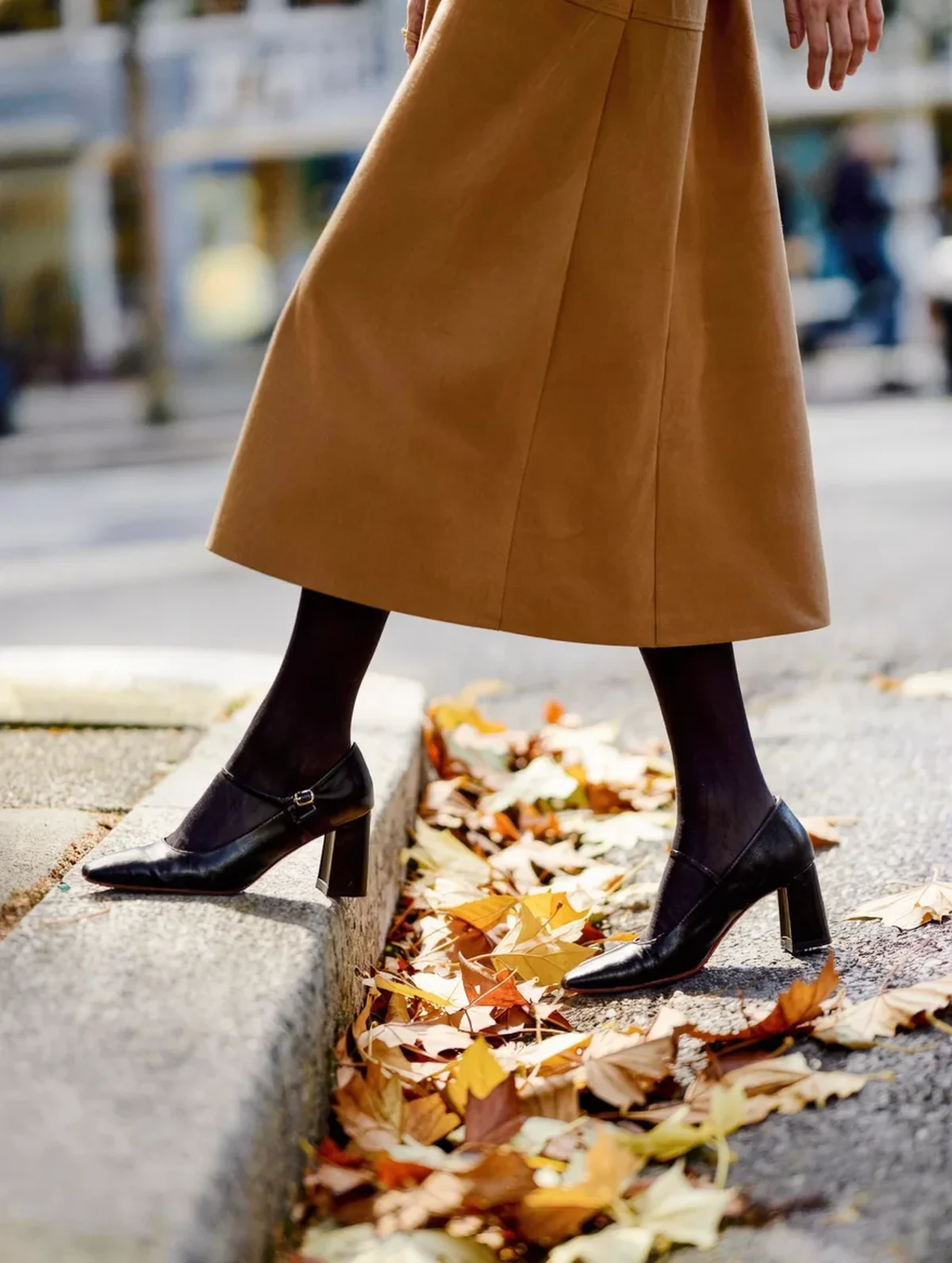
Look for something that holds the instep. Mary Janes, T-bars, ankle straps, lace-up styles and heeled ankle boots all keep the foot back in the shoe. A plain low-cut pump has nothing over the top of the foot, which is why pumps are the usual suspects.
Check the insole material. A suede or lightly textured sock lining grips better than a glossy one. Run a thumb across it in the shop; you can feel the difference straight away.
Consider a small platform. A platform of about 1 centimetre under the forefoot gives you the height with a gentler slope. And with boot season starting, remember that a heeled ankle boot is the most secure heel you can buy — the whole shaft is doing the job of a strap.
When is sliding a sign the shoes are simply wrong?
When the fixes do not hold. If a ball-of-foot pad helps for twenty minutes and then your toes are crushed again, the shoe is too long, too wide or too steep for your foot, and no insert will change its shape.
When you get pain, not just annoyance. Toes that go numb, burning under the ball of the foot, or nails that bruise are signs of too much pressure at the front. Swap to a lower heel or a style with a strap.
If foot pain continues after you have changed shoes, see a podiatrist or another qualified professional. This is general information, not medical advice.
FAQ: Sliding in Heels Questions, Answered
Do ball-of-foot cushions really stop feet sliding forward?
They help in most cases, because they add grip and fill a little space under the forefoot. They work best in shoes that fit well but have a smooth insole. They cannot rescue a shoe that is a full size too big.
Should heels be a size smaller than flats?
Not as a rule. Sizing varies by brand and by shape, so fit each pair on its own. Your heel should sit against the back of the shoe and your toes should lie flat without touching the end.
Why do my feet slide forward more in tights?
Nylon is smooth and most insoles are too, so there is very little friction between them. Tights with grip soles or a suede-topped pad under the ball of the foot usually solve it.
TL;DR:
- A heel turns the insole into a slope, and your weight pushes your foot down it.
- Check for a finger of space behind the heel or a gap at the sides before buying inserts.
- A grippy pad under the ball of the foot and a strap over the instep fix most sliding.
- Lower block heels, small platforms and heeled ankle boots slide the least.
Get the grip back under the ball of your foot and your toes stop paying for every step — a good thing to sort out now, before party season puts you in heels for hours at a time.
Keep Reading
This article is for general styling and informational purposes only. Trends, sizing, availability and pricing may vary by brand and season.